Commercial · Meadowvale South
Panic & Exit Hardware in Meadowvale South
The new access-control reader at the staff entrance works fine going in, but nobody has sorted out the door's exit side, and right now a card reader and a pushbar exist as two separate ideas.
In plain words
Electrified exit hardware adds a layer without changing the basic behaviour of the door: a person inside can still leave under one motion of the hand, every time. A request-to-exit switch tells an access-control panel that the pushpad or crossbar was actuated, usually paired with a door-position contact so the panel can also tell a normal exit from a forced or propped door. Electric latch retraction lets a fire-rated opening behave like a push-pull door for staff, provided it relatches automatically on a fire-alarm signal, since that kind of door never carries a mechanical dogging function. An alarm module sounds when the device is used.
How the visit goesAfter the fit-out, the gym floor now holds more people than the old office space ever did, and the exit door at the back still has the same turn-lock it had when the room held desks.
Panic & Exit Hardware
How the visit goes
Confirming why the door needs this hardware
The visit starts with the reason exit hardware is being discussed at all: an occupant load that has crossed a threshold, a fire inspector's note, a new use for the room, or an existing device that has stopped working the way it should. Confirming this first decides everything downstream, because a door required to have a releasing device is treated differently from one where an owner simply wants easier egress. Whoever is responsible for the building is asked directly what triggered the visit, and the answer is recorded alongside the door it concerns before any hardware is chosen.
Choosing the device for the opening
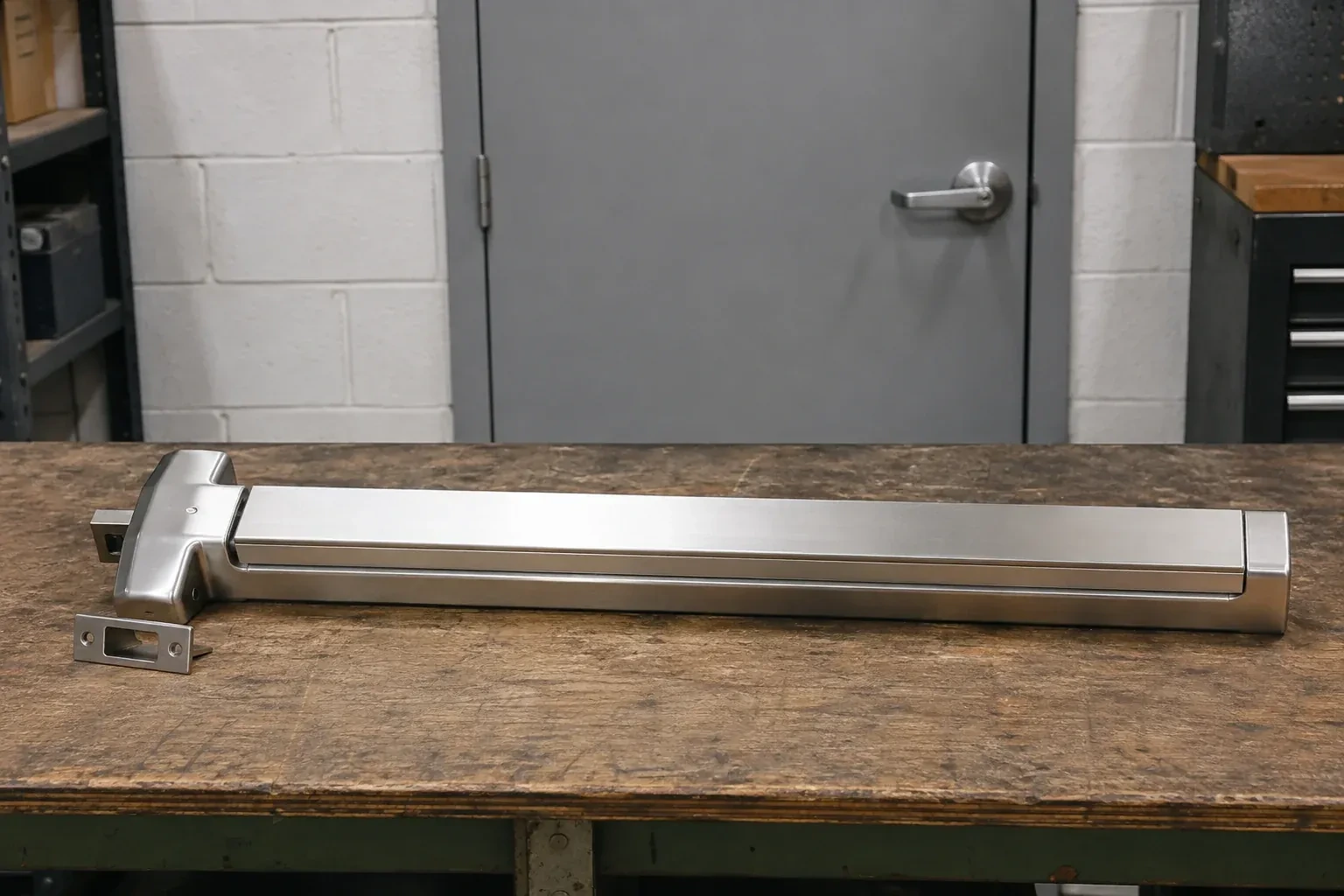
With the assessment done, the locksmith matches a device family to the door: a rim exit device for most single doors, a mortise device where a heavier-duty case suits the opening, or a vertical-rod device where latching is needed at both the top and bottom of the frame. Fire-rated openings take fire exit hardware specifically listed for that duty, never a standard panic device pressed into a role it was not built for, and listed rim fire-exit hardware covers a wide range of those openings on its own. The chosen device is matched to the door's width, handing and existing preparation before it is ordered.
Room to grow into the next change
If the space changes use again, adds seating, or the occupant load creeps upward with a future renovation, the hardware fitted now is already suited to a use that requires it, rather than something that will need revisiting the moment the room grows busier. Keeping a note of the occupant load the current hardware was specified for means a future change can be checked against that number before it becomes an inspector's finding rather than a planned upgrade.
Panic & Exit Hardware
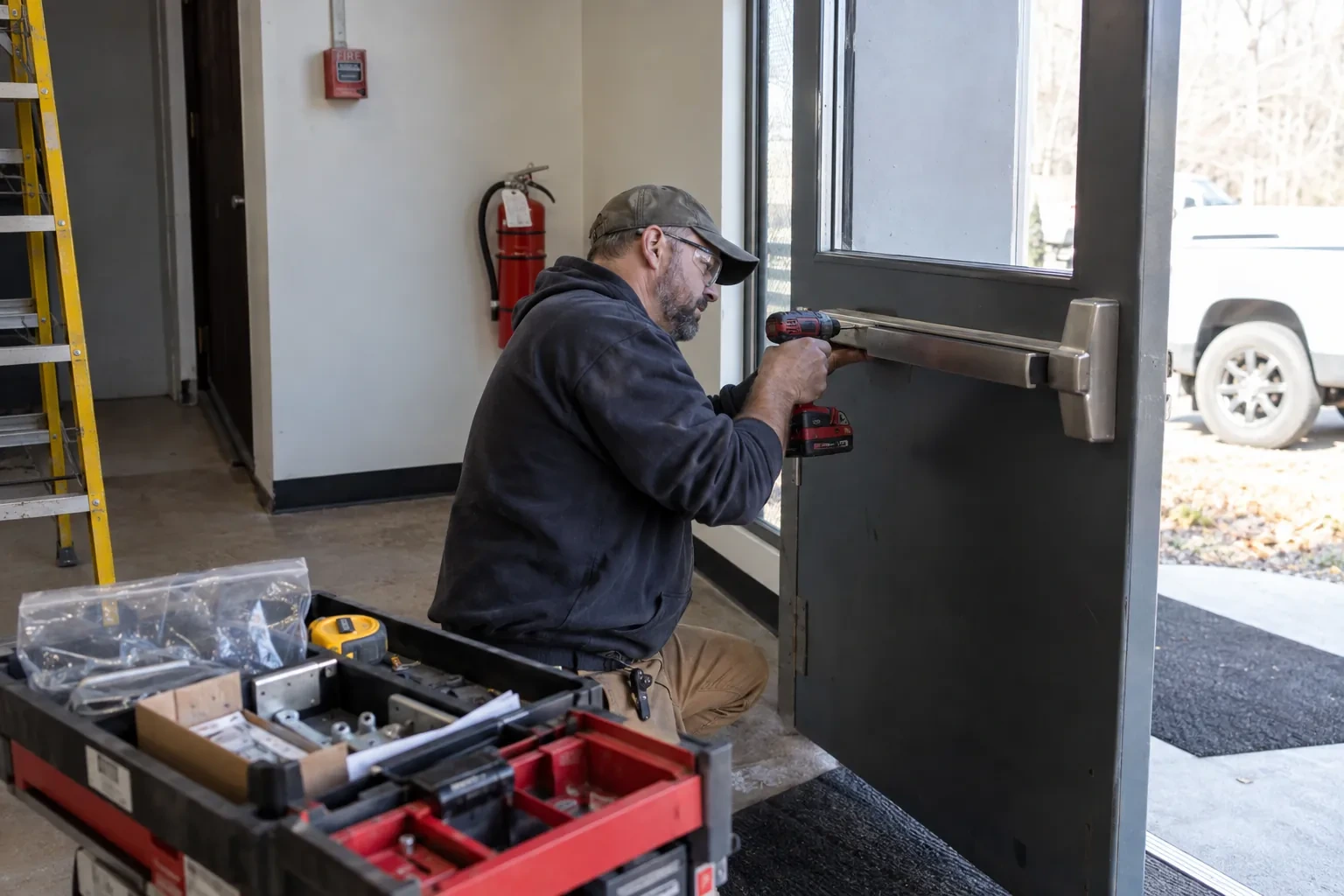
In the van
Installation template and jig
Door closer
Dogging key or keyed cylinder
Through-fixings and mounting hardware
Rated exit device
Panic & Exit Hardware
What affects the quote
Electrified functions added
A request-to-exit switch or electric latch retraction adds wiring, a power source and coordination with the building's other systems, while a standalone alarm module can run on its own battery; each is priced alongside the mechanical installation itself.
Signage and labelling
Any exit signage or alarm labelling the opening needs is a small addition on its own, but it is named in the quote rather than assumed to already exist on the door.
Fire-rated versus non-rated opening
A fire-rated door needs hardware specifically listed for that assembly and installed to keep the rating intact, which is more involved than fitting a standard device to a non-rated door.
What to have ready
- What is the room's intended use and approximate occupant load?
- Who should hold the dogging key once the work is finished?
- Is this for new construction, a renovation, or an existing building?
Panic & Exit Hardware: questions
QuestionsWhat should I have ready before the visit?
Knowing the intended use of the room, roughly how many people it holds, whether any doors are already fire-rated, and whether any of them are part of a pair helps the locksmith bring the right devices. If a fire inspector or building official has already given a note about the opening, having that note or its reference number on hand keeps the visit focused on what was actually flagged.
What is dogging, and can every door have it?
Dogging holds the device's latch retracted so the door works as a simple push-pull for a period, useful during business hours on a busy entrance. It is not available on fire-rated openings, because a fire door must keep an active latch at all times; on those doors, electric latch retraction achieves a similar push-pull convenience without ever leaving the latch mechanically held back.
What does the finished installation actually prove to an inspector?
It proves that a specific device, rated for the opening it sits on, releases under an appropriate force, latches fully, and has been tested and recorded on a given date. The record travels with the building, so a fire inspector reviewing the space later is looking at a documented history of that exit rather than testing hardware with no known installation date or specification.
Related services
- Master Key System DesignA dental office wants the front desk to lock up at night without ever holding a key to the room where patient records and controlled supplies are stored.
- Access Control InstallationThe keypad on the side door has started sticking on cold mornings, codes get shared instead of reset, and half the staff still remember a code you meant to retire two hires ago.
- Commercial-Grade Lock ReplacementThe kitchen delivery door gets shouldered open more than a hundred times a shift, and lately the latch slips past the strike plate instead of catching it on the first push.