Change or rekey · Mississauga
Deadbolt Installation
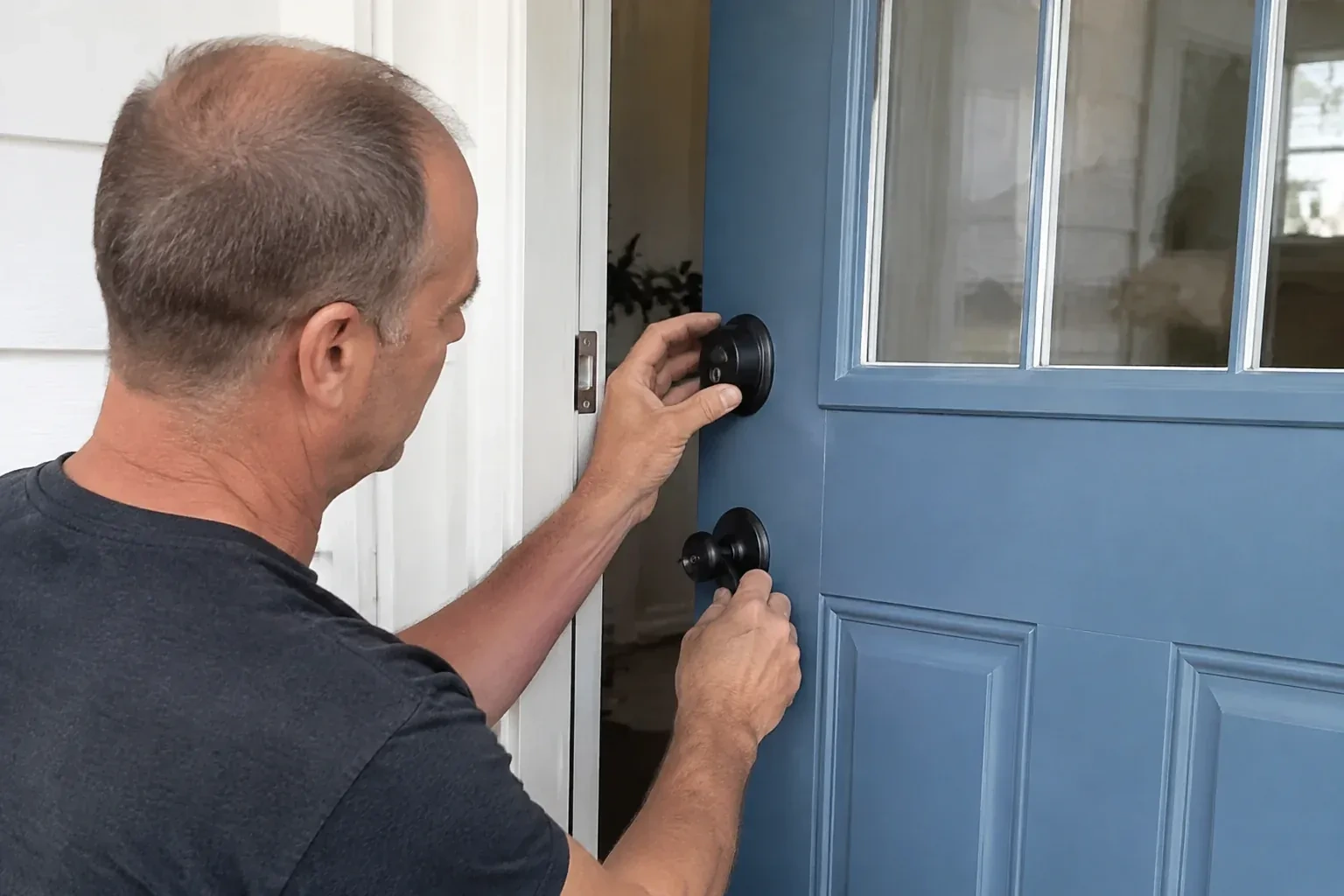
You bought a keypad deadbolt online and pulled the old one off, only to find the hole in the door is a different size and the bolt latch sits at a backset the new kit does not list.
In plain words
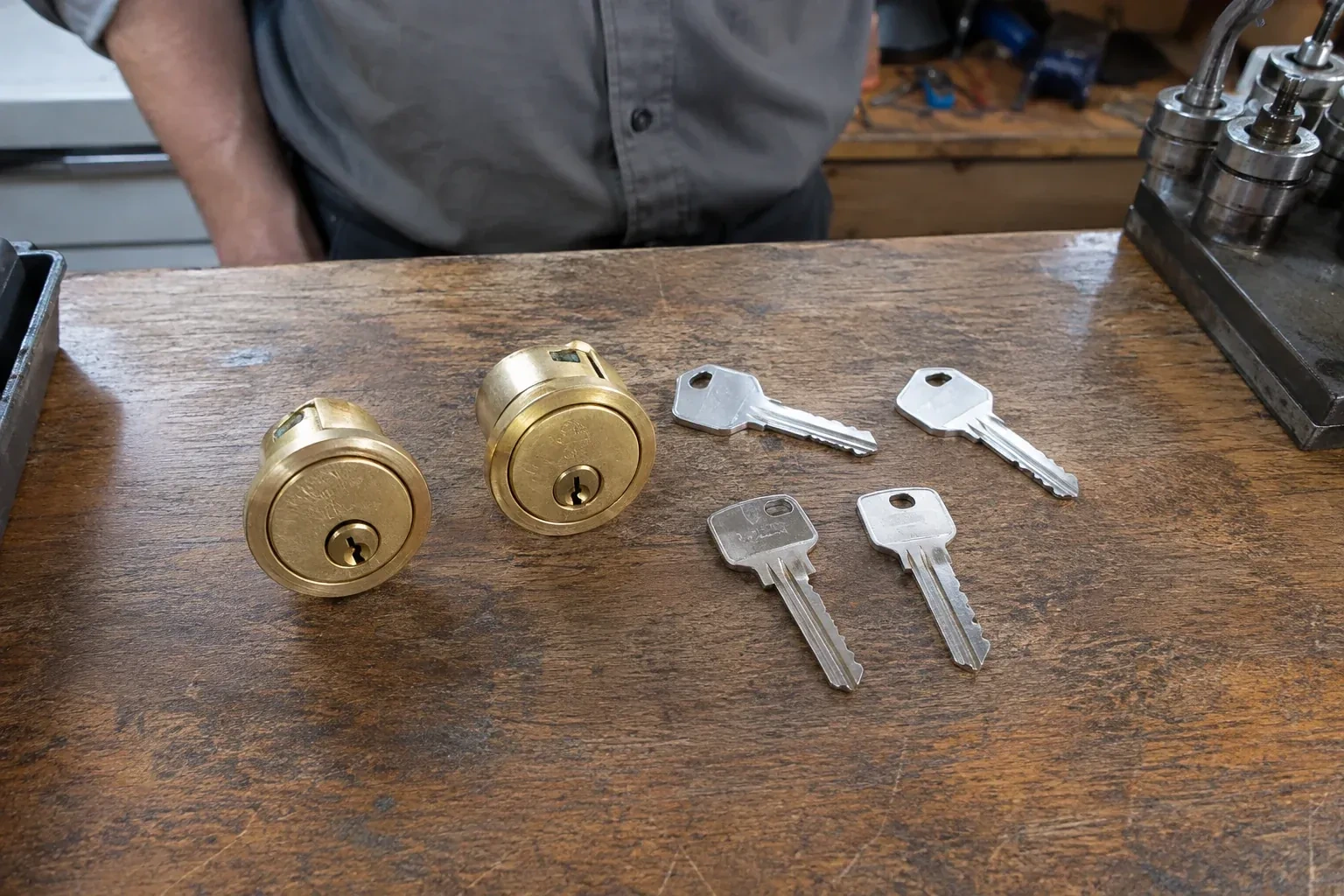
A deadbolt installation is also the moment to sort out keys. The new cylinder can be pinned to match the key you already use, so the household stays on one key, or set to a fresh key if you would rather retire whatever copies are in circulation. Many keypad and smart deadbolts fit the same standard bore as a mechanical one, so a door prepared today for a keyed bolt often accepts one later, though the exact model's bore and thickness still need checking. Either way you leave with keys that work in every door they are meant to, tested one by one.
How the visit goesYou bought a keypad deadbolt online and pulled the old one off, only to find the hole in the door is a different size and the bolt latch sits at a backset the new kit does not list. The door is now open and the box is on the counter.
Deadbolt Installation
How the visit goes
Glass, sidelights and what is within reach
Glass changes the conversation about which deadbolt to fit. A pane in the door or a sidelight within an arm's reach of the lock means an inside thumb-turn could be reached by breaking the glass, which is why double-cylinder deadbolts are sometimes suggested. The locksmith measures the distance from the glass to the lock, notes whether it is tempered, laminated or plain, and lays out the options: a captive thumb-turn that needs a key only when you choose, a laminated pane or a tested security film that can delay an arm, or moving the bolt height. The aim is a door that keeps a stranger out and still lets everyone inside leave with one turn of the hand.
Cutting a pocket the bolt can fill
The strike is located from the bolt itself rather than from a measurement. The bolt tip is chalked, the door is closed and the bolt is thrown firmly against the jamb to leave a mark at the true centre. The locksmith bores the pocket there with a 25 mm bit to a depth of at least 28 mm, so a 25 mm bolt seats fully and reaches its deadlocked position instead of stopping short and feeling stiff. The pocket is checked with the bolt extended before any plate goes on, because a strike screwed over a shallow hole hides the fault until the first cold morning when the door has moved.
A frame that now holds the bolt
Behind the new strike plate is the part of the job you cannot see and will never need to think about. The pocket has been bored deep enough for the bolt to seat fully, the plate has been let into the jamb so it sits flush, and the long screws reach through the jamb into the framing behind it. On a door that had been forced or had stripped screw holes, a full-length reinforcer may sit under the strike. If you press the jamb with your palm now, it does not flex. That stiffness is what a bolt needs to do its work, and it is the reason the installation took as long on the frame as on the door.
Deadbolt Installation
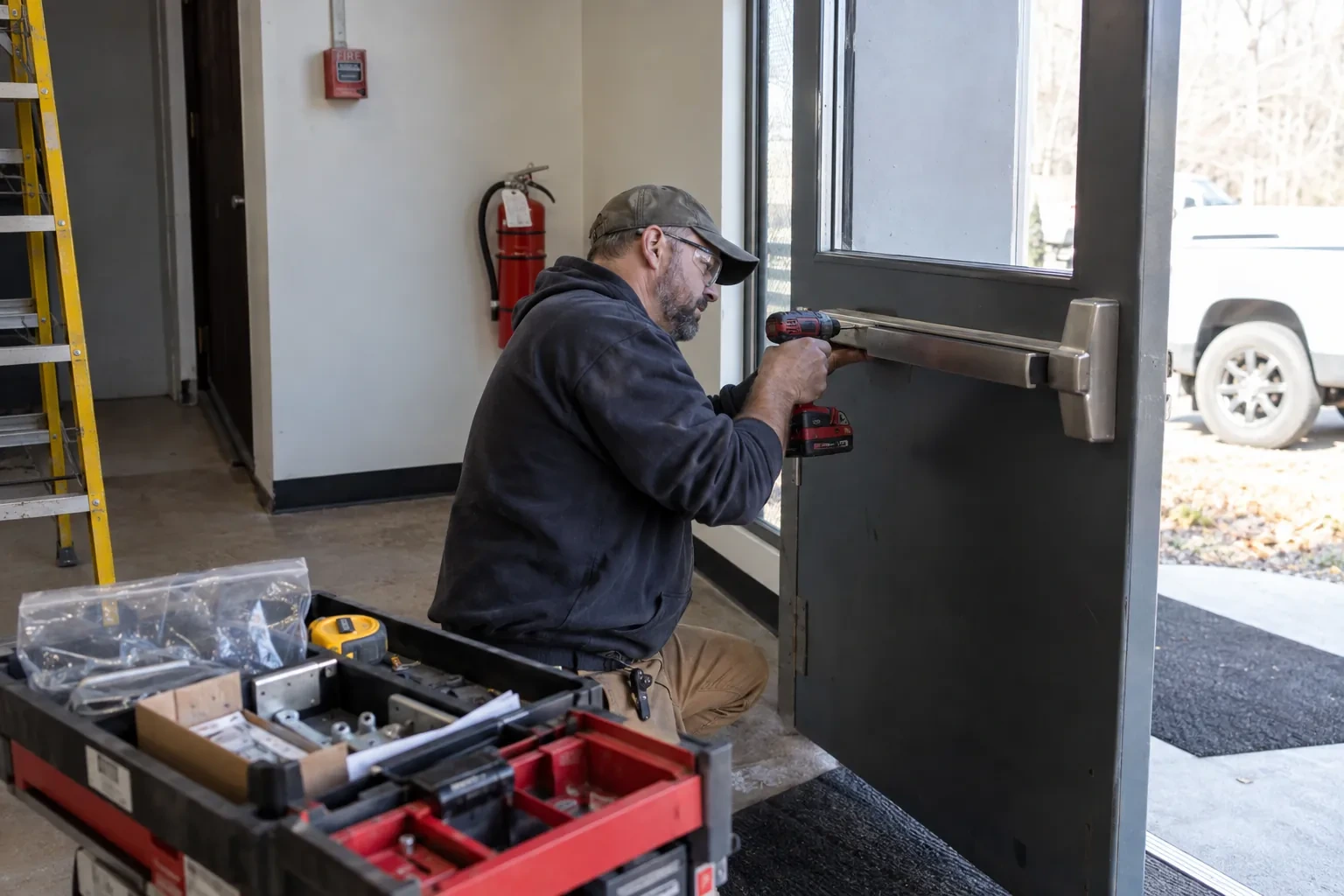
In the van
Boring jig and 54 mm hole saw
Reinforced strike plate
Rekeying pins and key blanks
Dry PTFE lubricant
Jamb reinforcer
Deadbolt Installation
What affects the quote
Mechanical, keypad or smart lock
Electronic deadbolts carry a different hardware line and add setup time for codes, pairing to a phone and a walk-through, all of which appear as their own entries.
Keying alike or a fresh key
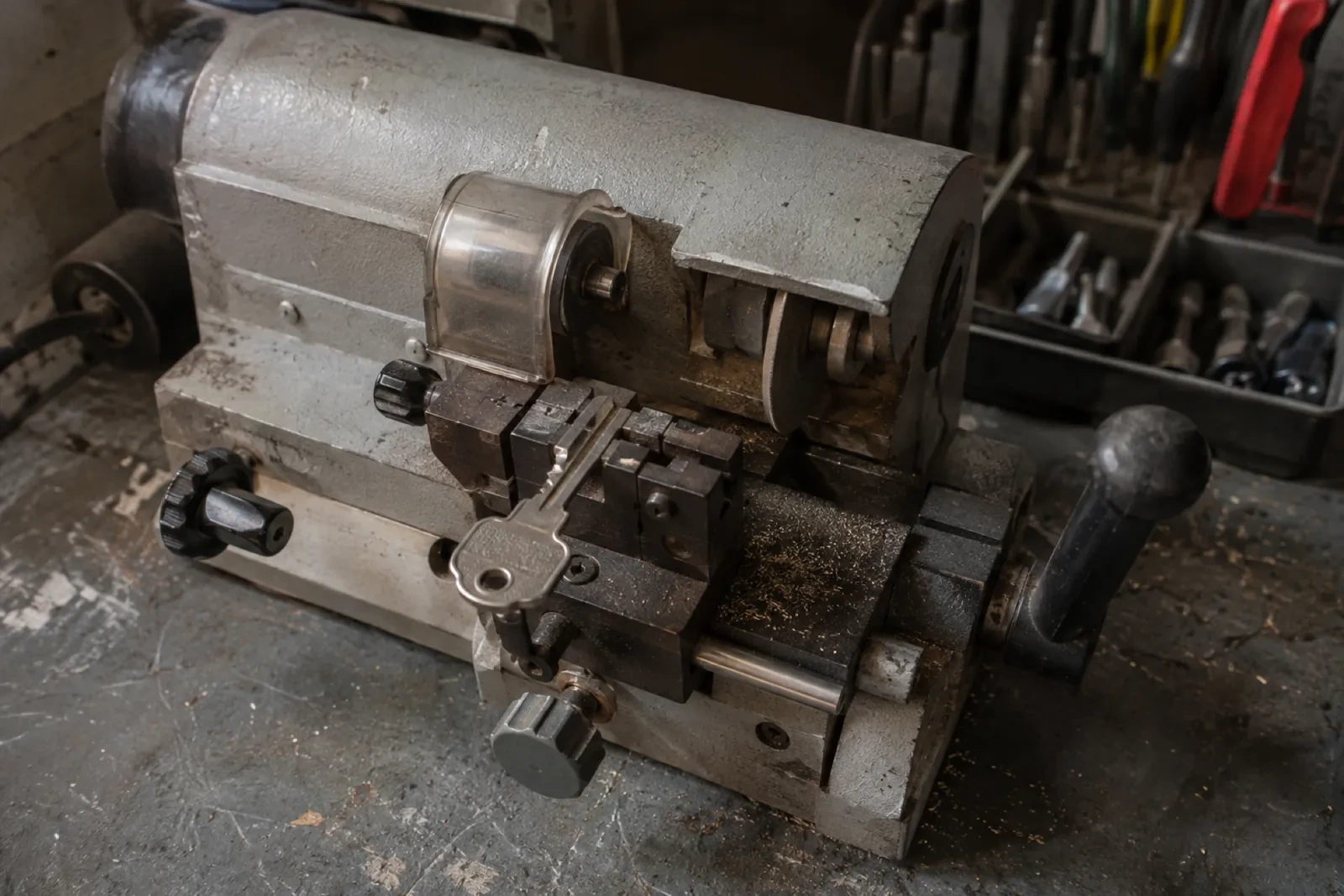
Pinning the new cylinder to your existing key, or setting several doors to a new key, is bench work quoted per cylinder, plus the number of keys you ask to have cut.
Number of doors
One front door is the simplest case. Front, back, side and garage-to-house doors done in one visit share the travel and setup, so the per-door figure usually eases as the count rises.
What to have ready
- Have you already bought the hardware, and if so which model and does the template come with it?
- Does anyone in the household have trouble with small knobs or stiff thumb-turns?
- Has the door or frame ever been forced, or are any screw holes stripped?
Deadbolt Installation: questions
QuestionsWhat do lock grades mean when I am picking a deadbolt?
Residential deadbolts are graded under an industry standard in three categories, security, durability and finish, with letter grades from C through A, so a lock marked with three A grades has met the highest level in each. Heavier commercial-pattern bolts are graded 1, 2 or 3, with 1 the highest. The grades let you match hardware to a busy family door or an exposed side entrance without relying on the weight of the box.
What is the difference between a deadbolt and the lock in my door knob?
The knob or lever holds the door shut with a spring latch: a bevelled tongue that snaps into the frame and can be pushed back by anything slid into the gap. A deadbolt is a solid rectangular bar driven by the key or thumb-turn alone, and when fully thrown it locks in place so it cannot be pressed back from the edge. The knob keeps the door closed; the deadbolt keeps it locked.
Does the finish of the deadbolt matter beyond looks?
It does on an exposed door. Winter salt spray, summer sun and humid air all work on the outside trim, and residential deadbolts carry a finish grade that reflects how well the coating resists them. A lifetime or PVD-style finish stays bright longer on a south-facing or roadside door, while a sheltered porch door can carry any finish you like. Matching the knob or lever below is mostly a matter of taste.
Related services
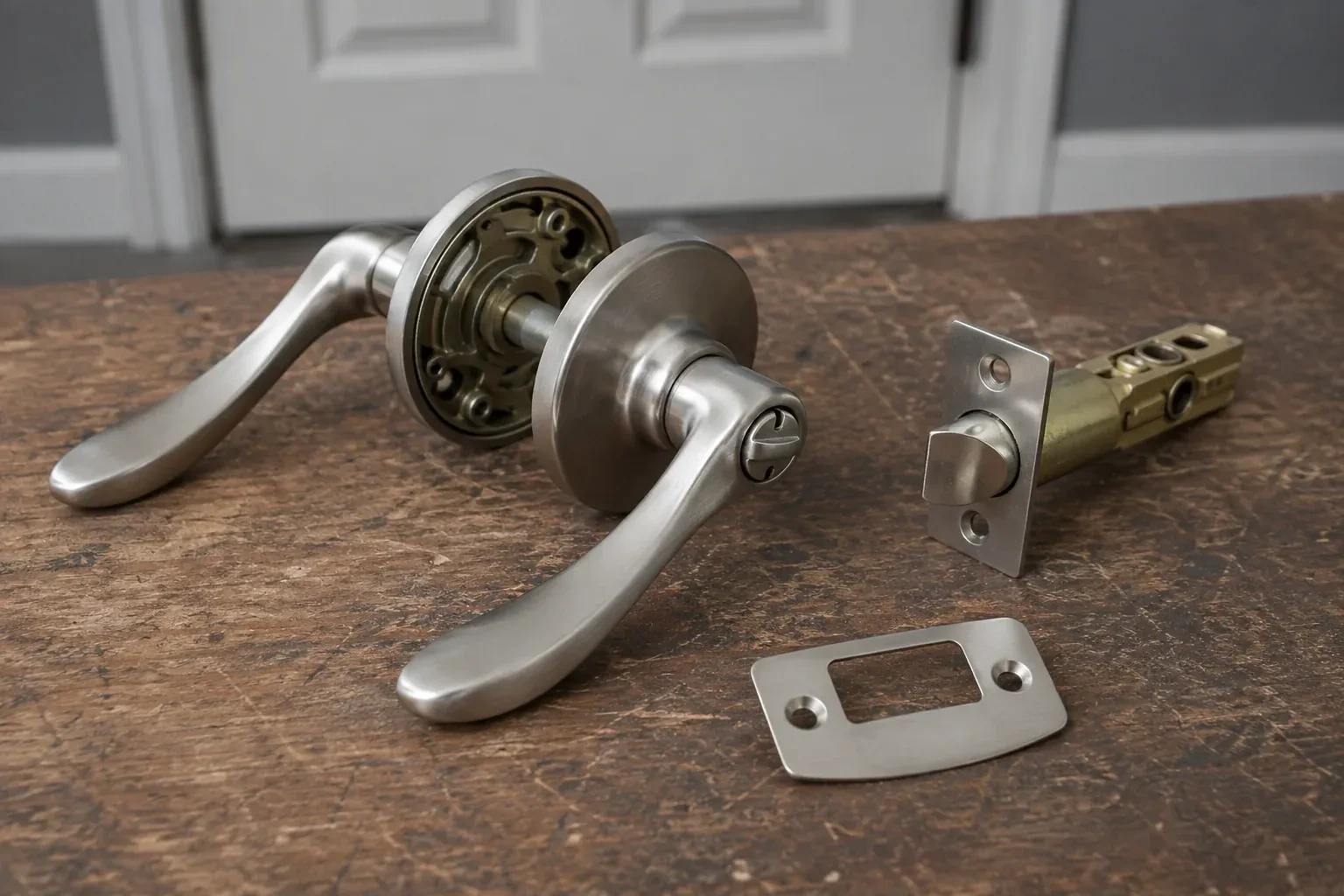
- Lock Replacement & UpgradeEvery morning the front door key needs the same little dance: push in, lift, wiggle, turn.
- Vintage Mortise Lock ServiceThe knob flops loose on its spindle and never springs back to level.
- Smart Lock InstallationThere are four copies of the front-door key floating around: one with the cleaner, one with a neighbour, one on a hook at your parents' place, and one you honestly cannot account for.