Locksmith
Practical advice
These are notes, not lectures. Each one takes something people often get wrong about locks and keys, explains it in a paragraph or two, and leaves you better placed to decide what your doors need and what they can happily do without.
Short answers to common questions
Do I have to show identification before you open my door?
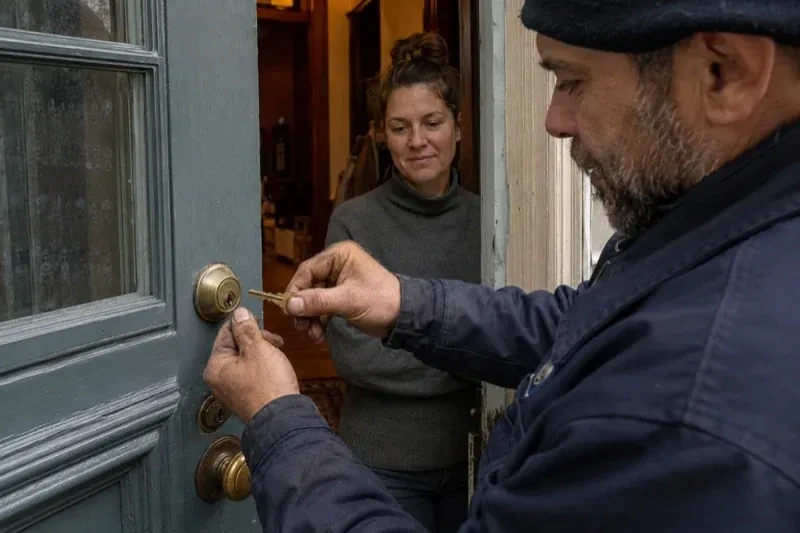
Yes, and it is a reassuring step rather than a hurdle. Photo identification that matches the address settles it in seconds. When your identification still carries a previous address, other proof does the job: a tenancy agreement, a recent bill, a piece of addressed mail, or a word with your building manager. Locksmiths take this seriously because it protects every home they are asked to open, including yours.
We have just taken over a unit and have no keys for the old locks. Is that a lockout?
It is treated as one, with the same authority check: your new lease and identification settle it. The locksmith opens the previous occupant's locks, then rekeys or replaces them so keys still floating around from the last tenant stop working. It is also the moment to decide how the unit will be keyed: one key for every door, separate keys for the cash office and stockroom, or cores that suit a growing staff.
What should I do while I wait for the locksmith?
Put both halves of the key somewhere safe, note whether the door or vehicle is locked, and leave the keyway alone. If it is bitter cold, keep the storm door closed so the lock is not taking freezing rain. Have identification ready, or vehicle papers for a car. If the door is open, stay near it. That is all; the extraction goes smoother for a lock nobody has poked at.
What should I have ready when I call about a break-in?
Whether the police have been called and any occurrence number; whether everyone is safe and the property is empty of intruders; which opening was forced and whether it closes at all; whether the damage is to the lock, the frame, the door or the glass; whether keys, remotes or codes were taken; whether you own, rent or manage the property; and whether there is glass beside the door. Photos on your phone help the locksmith bring the right hardware.
If the cylinder is replaced, can it be keyed to my existing key?
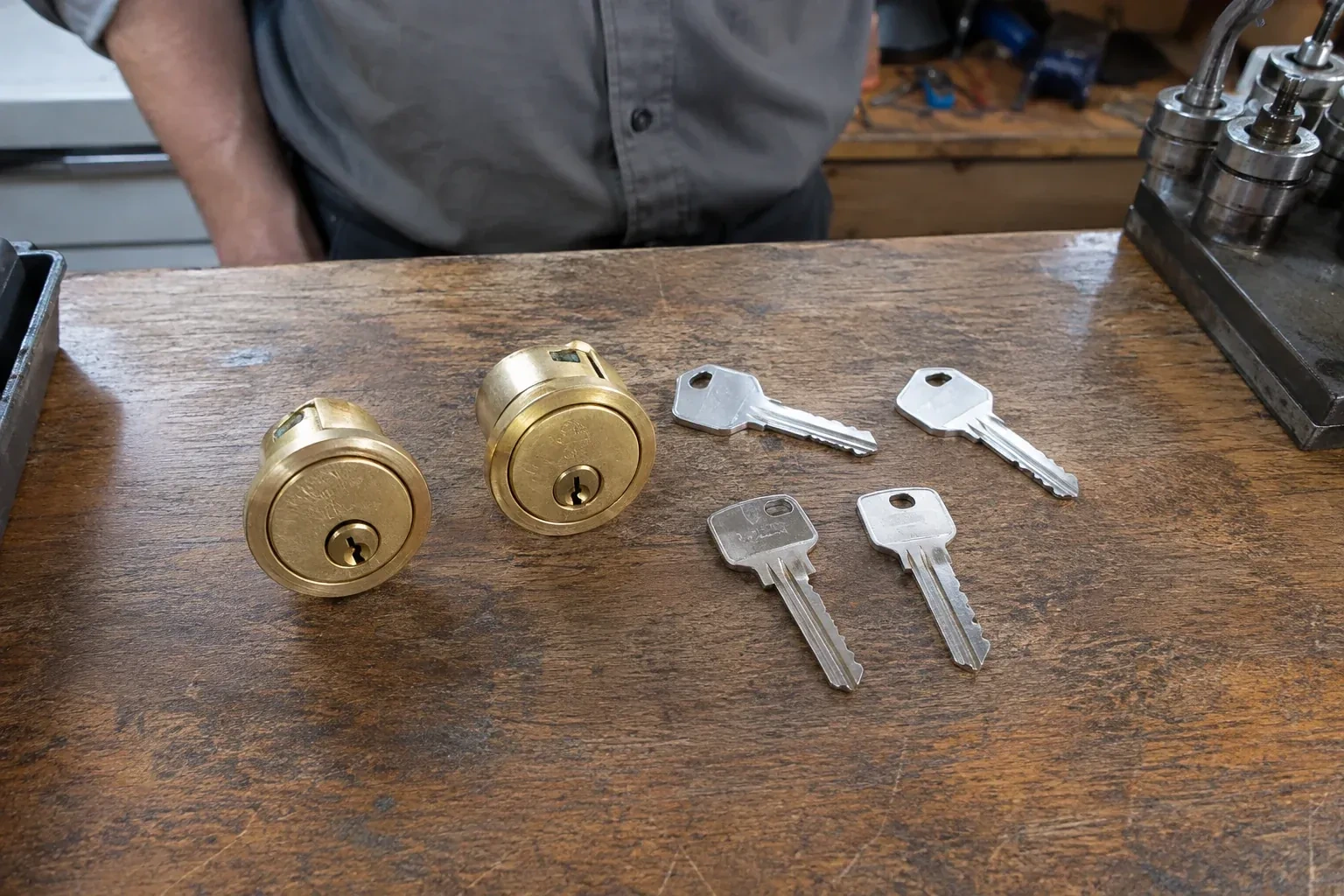
Often, yes. A replacement cylinder in the same keyway can be pinned to the cuts on the key already on your ring, so the front and back doors stay on one key and nothing else in the house changes. If the old keyway is no longer made or the key is badly worn, the new cylinder comes with fresh keys and the other doors can be rekeyed to match in the same visit.
Does stamping keys 'do not duplicate' stop copies?
It asks; it does not compel. The stamp is a request that a key-cutting counter may or may not honour, and manufacturers say as much. Real control comes from a restricted keyway, whose blanks are issued only through authorised channels against a key card, or simply from knowing how many keys exist and who holds them. A rekey resets that count to a number you chose.
Can I keep one door on a different key from the rest?
Yes, and it is common. A basement suite or in-law apartment often gets its own key so the tenant's key opens their door and nothing else, while your key opens the main house. A home office, a storage room or a shed can be kept separate for the same reason. The locksmith sets up the groups you want, pins each accordingly and tags the keys so the separate one is not mixed into the household set.
What do lock grades mean when I am picking a deadbolt?
Residential deadbolts are graded under an industry standard in three categories, security, durability and finish, with letter grades from C through A, so a lock marked with three A grades has met the highest level in each. Heavier commercial-pattern bolts are graded 1, 2 or 3, with 1 the highest. The grades let you match hardware to a busy family door or an exposed side entrance without relying on the weight of the box.
Can I stop people copying my house key?
A restricted keyway helps with that. The key blanks are controlled by the manufacturer and its authorised locksmiths, so a copy generally requires the card, record or authorisation the program uses, cutting down on copies made at an ordinary kiosk. It suits homes where keys are lent to cleaners, contractors or tenants. The cylinders are fitted in the normal way, and you keep the key card safe because it is what future copies depend on.
Can my interior doors be serviced too, and can one key work all of them?
Usually yes to the first, and to the second once the locksmith checks the locks. Interior mortise latches with privacy turn buttons are lighter versions of the entry lock and respond to the same clean and re-spring. Interior locks in a house were sometimes supplied to one bit key, and where the key sections, warding and levers actually match, the locksmith can restore that arrangement so a single key opens several bedroom and bathroom doors. It is a practical thing to have when a child locks a bathroom from inside.
Can the lock be set to lock itself?
Most models offer auto-lock, and it is one of the settings the locksmith configures with you. You choose the delay, from a few seconds to several minutes, and the lock throws the bolt on its own once the door has been closed that long. Models with a door sensor wait until the door is actually shut, which avoids the bolt extending into thin air. Families who have ever wondered whether the back door got locked tend to value this most.
Does this service cover the gate itself, or only the lock?
Both, where the two are connected, which on a gate they usually are. A locksmith working on a gate lock also looks at the hinges, the post and the closer, since a lock rarely fails on its own when the real cause is a sagging gate or a post that has shifted. Work that goes beyond hardware the locksmith carries, such as rebuilding a rotted post or a damaged fence panel, is flagged so it can be handled by whoever normally does that kind of repair.
Do I need to prove the mailbox is mine before you change the lock?
Yes, and it takes only a moment. For a house or a standalone box, an address match usually settles it. For one compartment in a shared building panel, a lease, a deed, a unit number matching the building's own records, or confirmation from the property manager does the job. This step protects every household on the same panel, including whoever calls next.
Can several employees each get their own code once the safe is open?
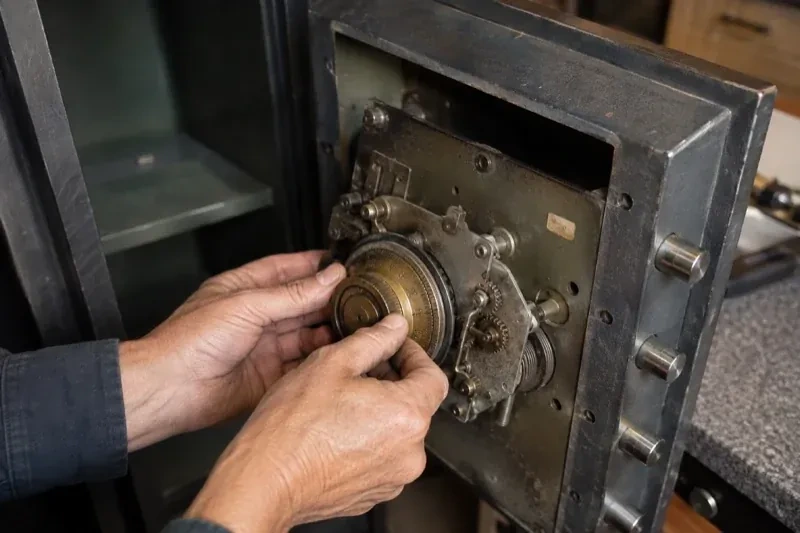
Many electronic locks support more than one user code, so a manager and one or more backup employees can each be set up separately during the same visit rather than sharing a single combination. A mechanical dial only holds one combination at a time, so multiple access there means agreeing who holds it and how that changes when staff do.
Will anchoring damage my flooring?
Anchoring leaves small holes at the anchor points, sized to the bolts being used, and on a finished floor these sit under the safe itself where they are never seen again. On tile, the risk of cracking nearby tiles is real enough that an alternative fastening point or a different spot in the room is often chosen instead of drilling straight through the tile itself.
What is bumping, and does this stop it?
Bumping uses a specially cut key that is struck while under light turning pressure, bouncing the pins to the shear line for an instant so an ordinary cylinder opens. It works on many standard pin tumblers. A high security cylinder needs its sidebar released by separately positioned finger or rotating pins at the same moment, and a bump key cannot set those, so the plug stays locked. It is one of the clearest advantages of the upgrade.
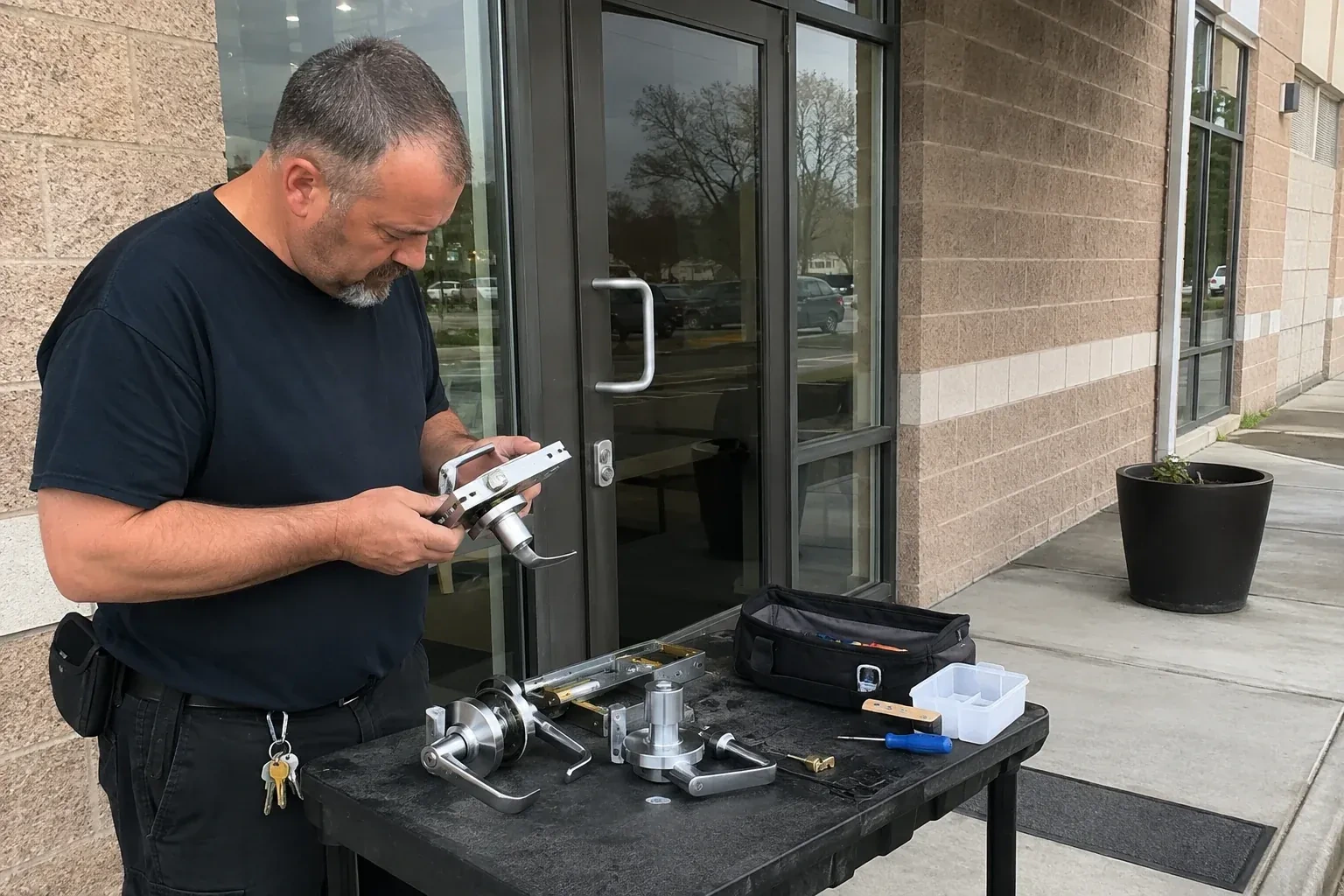
How do you confirm I am allowed to have the locks changed?
For a business the locksmith looks for someone with standing: the owner, a director, or a manager who can show written authority from one of them. A lease, a business registration or a letter on company paper usually settles it, along with photo identification. Where doors belong to a landlord, the property manager's approval is asked for as well. This is a short step and it protects the business from having its own locks changed by the wrong person.
What happens if a master-level key goes missing?
The current chart shows exactly which doors that level was designed to reach, which for a lost top-level master can mean the whole property rather than one group. Depending on how the key was lost and who else already holds that level, the usual options are repinning the affected cylinders and reissuing keys to the remaining holders; a restricted keyway lowers the odds of an unauthorized copy being cut but is not proof that one has not been made. Without a current chart, the first task is reconstructing that scope.
What's the difference between a standalone and a networked system?
A standalone unit is a self-contained reader and lock at one door, holding its own list of credentials, though it can still need a power or network connection to run. A networked system ties several doors to shared management, sometimes through more than one controller, aggregating schedules and combining logs across all of them. The right choice depends on how many doors need controlling and whether the business wants a single place to manage all of them, rather than one being universally better.
What should I have ready before the visit?
Knowing the intended use of the room, roughly how many people it holds, whether any doors are already fire-rated, and whether any of them are part of a pair helps the locksmith bring the right devices. If a fire inspector or building official has already given a note about the opening, having that note or its reference number on hand keeps the visit focused on what was actually flagged.
How do you know if my door is part of a fire separation?
The door and frame usually carry a small metal label stating the assembly's rating, and the building's own fire safety plan or a previous inspection report will identify which doors are part of a fire separation. If a label is missing or unreadable, that is worth raising with your building's fire safety plan holder before hardware is chosen, since it changes what can legally go on the door.
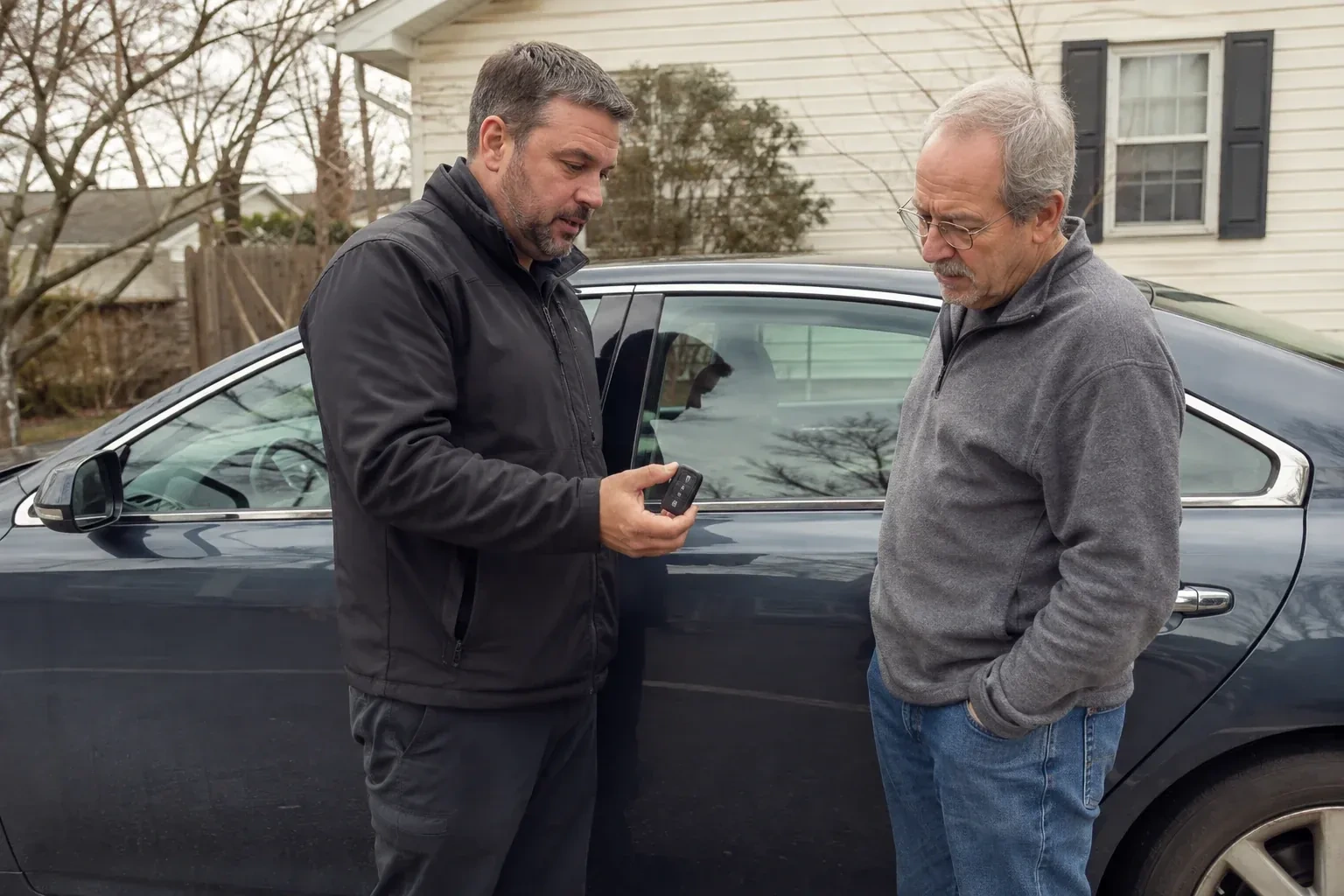
Should I call a tow truck or a locksmith?
For keys locked in, lost or broken, a locksmith opens the car where it stands and can usually make a key on the spot, so the car drives away. A tow moves the car to a shop but leaves the key problem unsolved. Roadside clubs send a locksmith for lockouts and reserve towing for cars that cannot be made drivable. If the shoulder is unsafe to work on, a short tow first may be sensible.
What is the small metal blade inside my smart key for?
It is the emergency key. When the fob's battery is flat, or the car's own battery has died and the doors ignore the buttons, the blade unlocks the driver's door mechanically. A small release on the fob lets it slide out. On a replacement fob the locksmith cuts this blade to your door lock and shows you where the keyhole is, since on some cars it hides under a cap on the handle.
How long does making a spare car key usually take?
The time depends mainly on the key system rather than the blade. A plain mechanical key can often be duplicated within one visit, without extra electronic work. A transponder or remote-head key adds a cloning or programming step, done off the vehicle when the chip supports it and through the vehicle's own diagnostic port when it does not, with the diagnostic route usually taking longer. The locksmith can usually say which category your vehicle falls into once the make, model and year are known, before the appointment starts.
What happens to my old fob once it's replaced?
A fob you hand over because it is no longer wanted is simply left with you, since it belongs to you regardless of whether it still works. If the old fob was actually lost rather than in your possession, there is nothing to hand over; instead its electronic authorization is removed from the vehicle's memory following that model's procedure, so its remote and starting functions no longer work for whoever does have it, though a mechanical blade built into it can still open an unchanged door lock.
Can I have a spare key made before I actually need one?
Yes, and on many vehicles it is one of the more straightforward visits in this service, since a working key already on hand can authorize the new one; a few models instead call for two working keys or a different programming route. The spare is cut, its chip is written in, and both keys are tested before the locksmith leaves, so the spare is proven rather than simply handed over untested.
How do I keep my ignition and keys in good shape going forward?
A little attention goes a long way: whatever lubricant the vehicle's own service information calls for worked into the keyway, keys wiped free of grit before use, and a worn or bent key retired in favour of a fresh cut from a crisp original. Catching a barrel that has started needing a wiggle early keeps it an easy fix rather than a stuck ignition later on.
My key fob case is cracked. Does that need fixing too?
It is worth addressing, since a cracked case lets in moisture and dust that can reach the circuit board and buttons inside, shortening the fob's working life. A replacement shell or a full replacement fob, paired to the vehicle, resolves this alongside any battery or pairing issue.
Why does the number of wafers in a lock matter?
Each wafer represents one depth the key has to hit precisely for the lock to turn, so a lock with more wafers has more combinations and takes a little longer to decode or pick than a simpler one. Most motorcycle locks use around five wafers, and manufacturers sometimes space the depth increments further apart specifically to reduce the chance that an unrelated key happens to fit. This is why an ordinary-looking key rarely works in an unrelated bike.