Lockouts · Mississauga
Break-In Damage Lock Repair
The shop's aluminum door has a bent meeting stile and the hookbolt is jammed half out.
In plain words
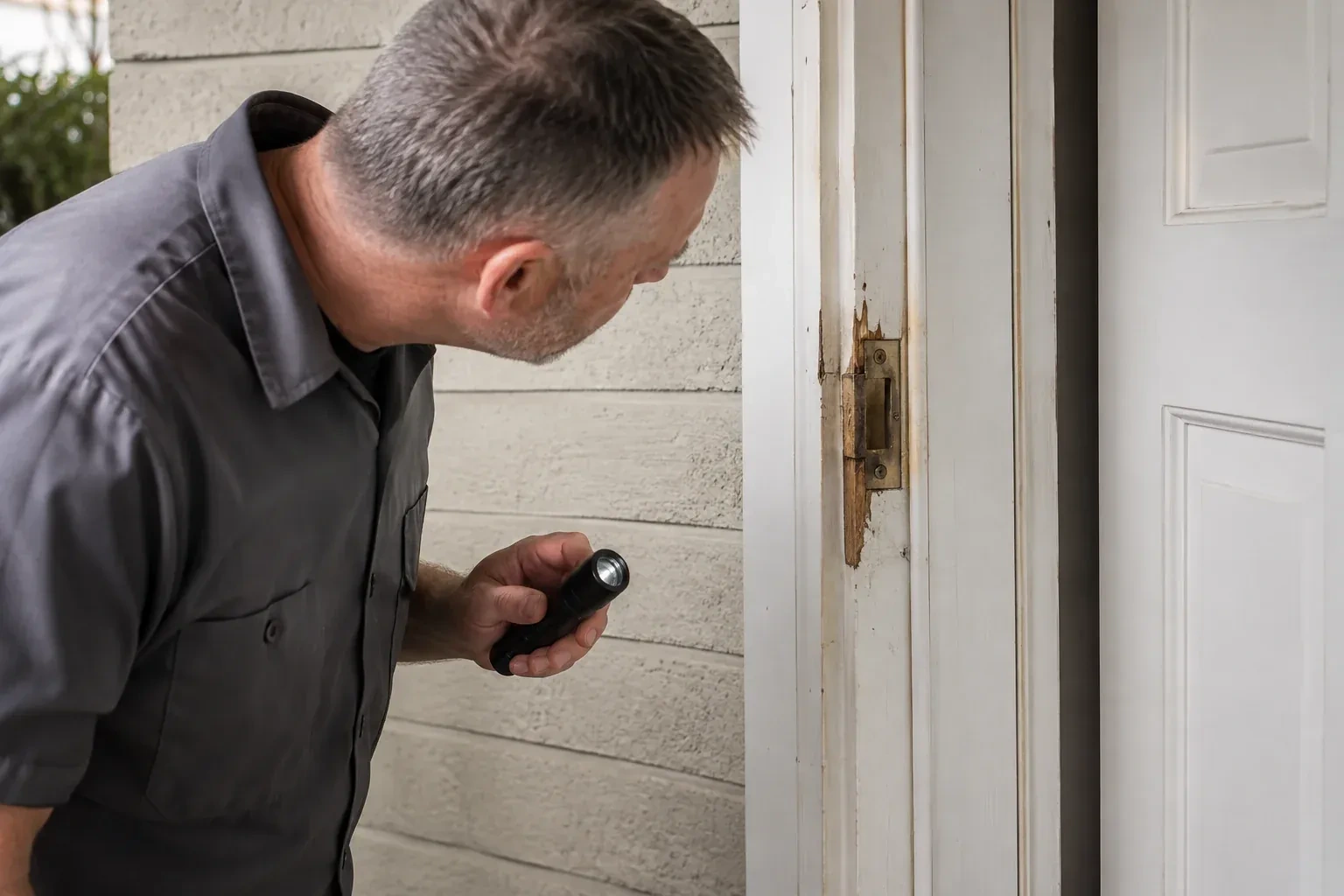
A break-in repair happens alongside a police file and an insurance claim, and a good locksmith keeps both in mind. Before any hardware is moved the damage is photographed as found: door face, edge, strike, jamb, hinges and glass. The old parts are kept for the adjuster unless you prefer otherwise, and the written record at the end lists what was broken, what was replaced, what was reinforced and what is left for another trade. Insurers ask policyholders to document losses, keep damaged property and keep receipts, and this visit produces all three. You choose who does the repair; the locksmith makes it easy to show what it took.
How the visit goesThey did not get in. The attempt left a screwdriver gouge in the door edge, a strike plate bent outward and a deadbolt that now needs a shove to throw. The lock held, but the door is telling you it was tested.
Break-In Damage Lock Repair
How the visit goes
The other openings
The attacked door was chosen for a reason, and the locksmith walks the rest of the property to see whether the same reason applies elsewhere. A back door with a knob lock and no deadbolt, a garage man-door on a light latch, a basement walkout hidden from the street, a sliding door with no anti-lift blocks or a side gate that is never locked are all noted. The walk takes a few minutes and lets you decide, with the whole picture in view, whether the repair stops at the forced door or brings the weaker openings up to the same standard while the tools are out.
Fitting the new deadbolt and cylinder
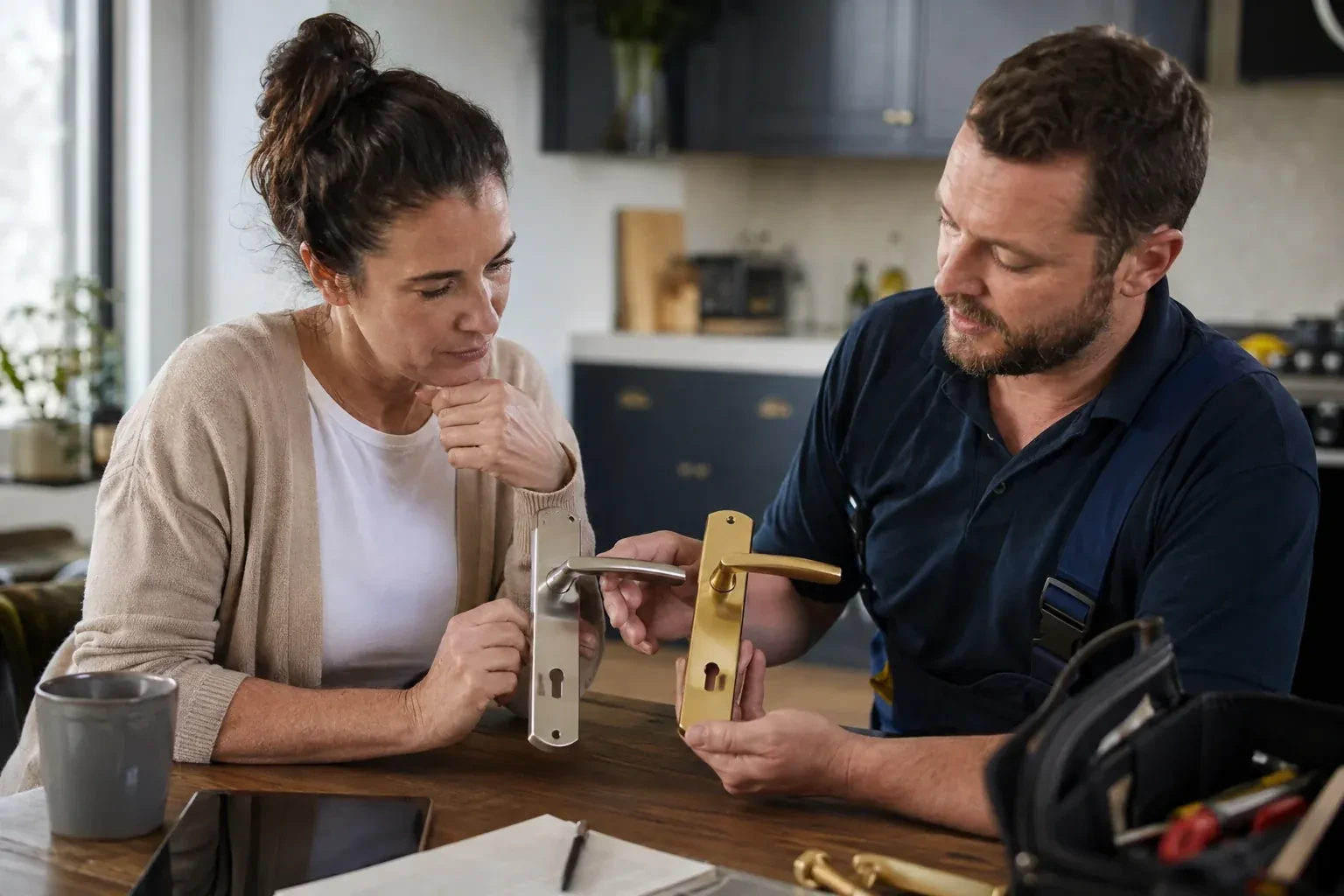
The replacement hardware is chosen for the door and for the attack it suffered. A deadbolt with a full one-inch throw, a hardened insert against sawing and a low-profile face that resists a wrench grip is the usual choice, graded to a recognised durability standard rather than the lightest unit on the shelf. It is matched to the existing bore and backset so no new holes weaken the slab, or the preparation is enlarged cleanly where the old hardware was small. The bolt is tested with the door open, then closed, and the strike adjusted until it throws without dragging. Trim and finish are matched to your other doors where you want that.
A door that closes and locks again
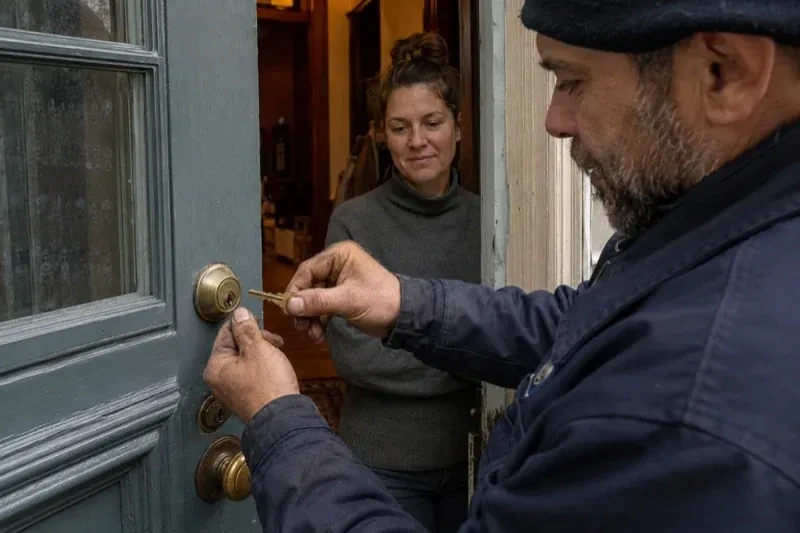
The visit ends with the door tested the way it will be used. The bolt is thrown and withdrawn with the door open, then closed, and it must slide home without dragging on the strike or stopping short of full extension. The latch catches when the door is pushed to, not slammed. The door meets its weatherstrip evenly and the thumb-turn works from inside without a key. You try it yourself before the locksmith packs up, with your own new key, so the first time the household locks up that night is not the first time anyone has tried the door.
Break-In Damage Lock Repair
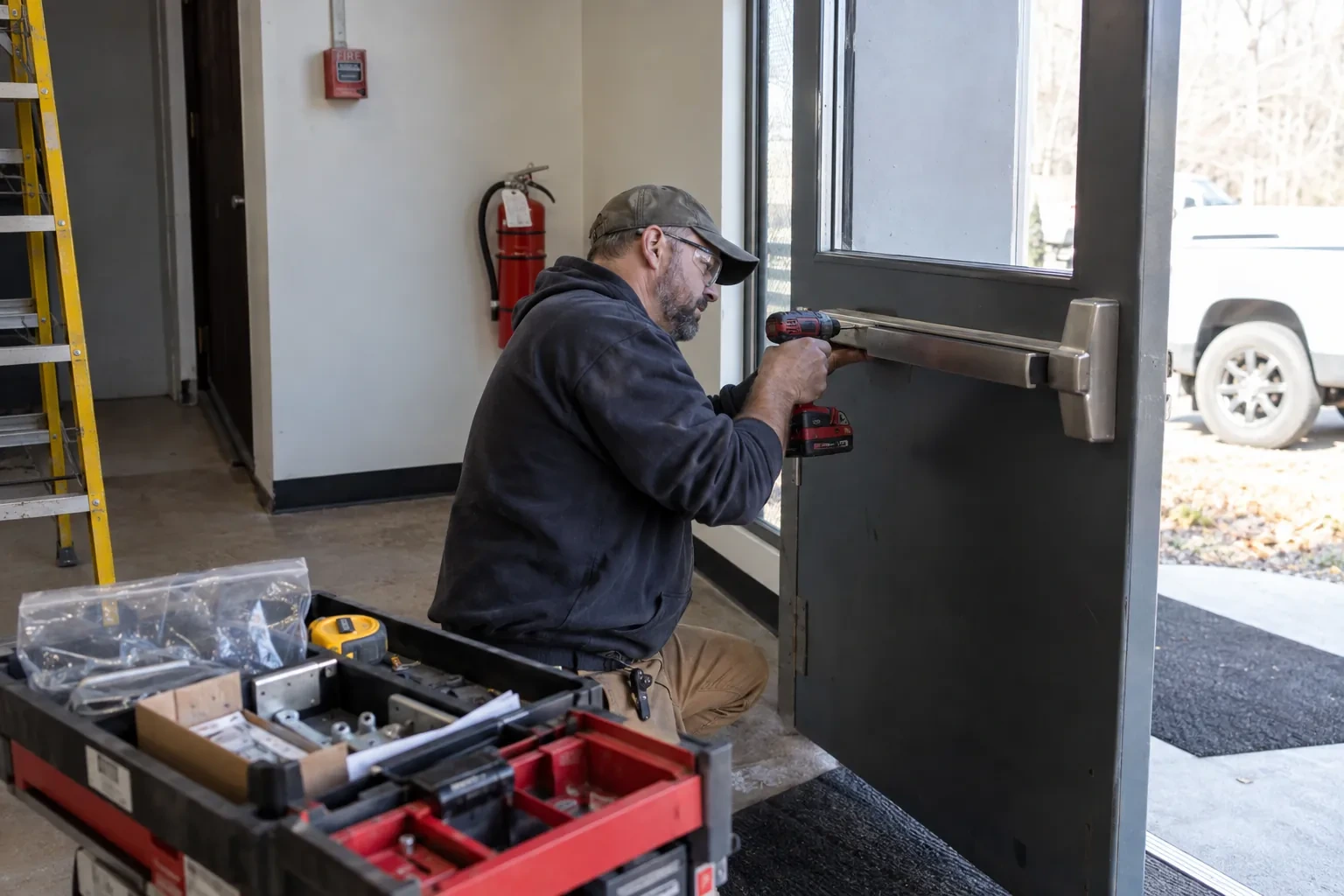
In the van
Jamb repair plate
Rekeying pins and key blanks
Security strike box
Three-inch strike and hinge screws
Replacement cylinder or core
Break-In Damage Lock Repair
What affects the quote
Door and frame material
A wood jamb over a stud takes standard reinforcement. Steel frames, jambs on masonry, fibreglass doors and aluminum storefront stiles each need their own fasteners and methods, which changes both labour and parts.
Door edge reinforcement
A wrap-around edge reinforcer is added when the wood around the bore is crushed or split. It is a separate part, chosen to suit the door thickness and the hardware going into it.
Lock failure or frame failure
Replacing a lock is hardware and fitting time. Rebuilding a strike side with a boxed strike, epoxy and long screws into the stud is carpentry as well, and is quoted as its own line.
What to have ready
- Is this a suite door in an apartment or condo building?
- Have the police been called, and do you have an occurrence number?
- Is everyone safe, and is the property clear of anyone who should not be there?
Break-In Damage Lock Repair: questions
QuestionsWhat should I have ready when I call about a break-in?
Whether the police have been called and any occurrence number; whether everyone is safe and the property is empty of intruders; which opening was forced and whether it closes at all; whether the damage is to the lock, the frame, the door or the glass; whether keys, remotes or codes were taken; whether you own, rent or manage the property; and whether there is glass beside the door. Photos on your phone help the locksmith bring the right hardware.
Should I call the police before the locksmith?
Yes. Call the emergency number if there is any chance the intruder is still there, and the non-emergency line of your local police service otherwise. A break and enter is reported by phone rather than through the online forms used for minor property damage. Ask for the occurrence number, since your insurer will want it. Once the police have released the scene, or told you they are not attending, the locksmith can begin.
I rent. Who arranges the repair, and can I change the lock myself?
Tell your landlord or property manager as soon as the police have been called; provincial tenancy law makes the landlord responsible for repairs to the unit, and most will arrange the locksmith. A tenant may not change locks without the landlord's agreement, and a landlord who changes them must give the tenant keys, so the visit is coordinated between you. If you arrange securing yourself in an emergency, keep the receipt and the record of what was done for both sides.
Related services
- Business Lockout ServiceAfter last night's power flicker the card reader beside the clinic door shows nothing.
- Broken Key ExtractionThe key went in like any other morning, you turned it, and something gave with a small metallic click.
- Seized & Jammed Lock OpeningThe old mortise lock on the front door of the house turns the key halfway and stops with a dull clunk.