Commercial · Mississauga
Commercial-Grade Lock Replacement
The kitchen delivery door gets shouldered open more than a hundred times a shift, and lately the latch slips past the strike plate instead of catching it on the first push.
In plain words
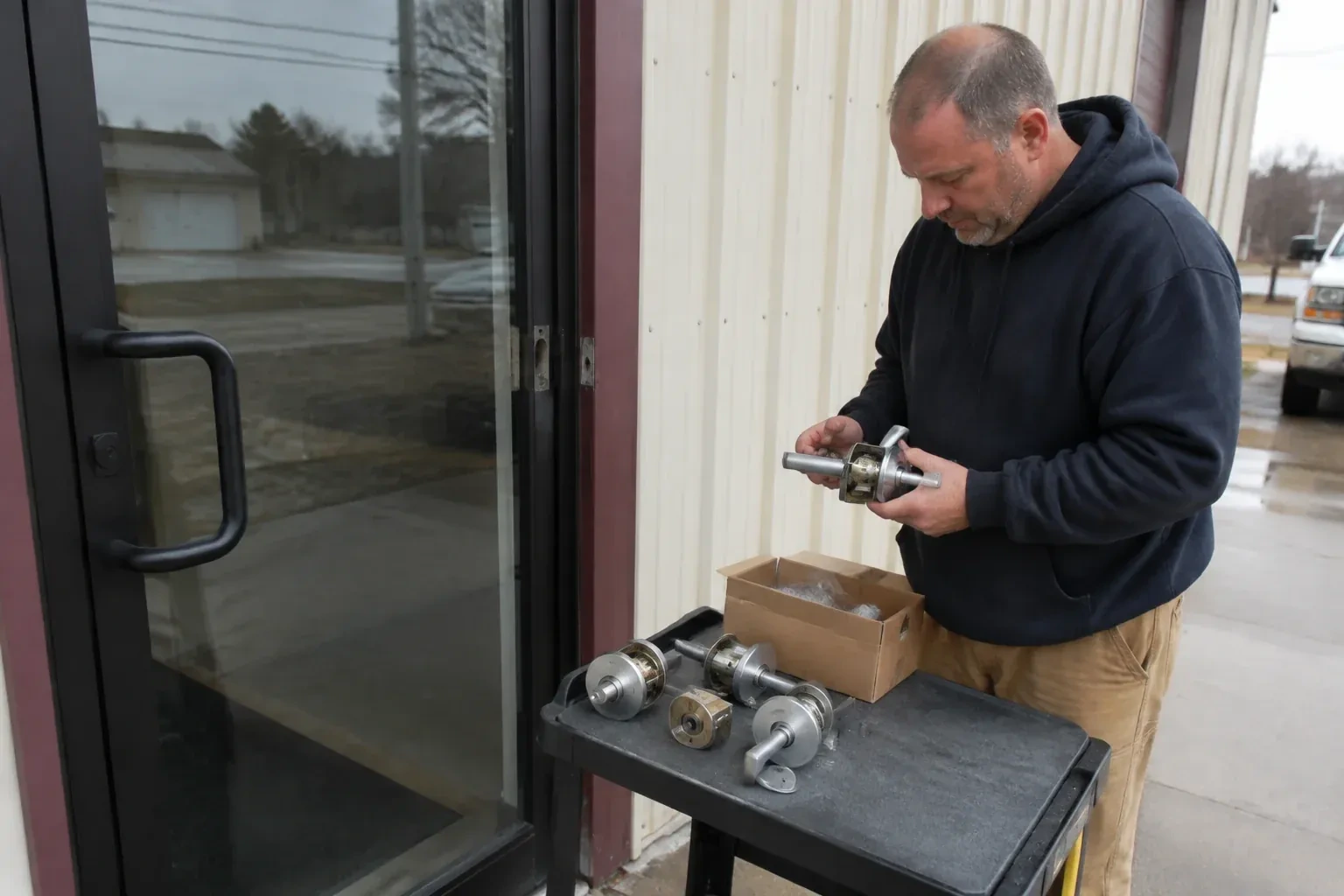
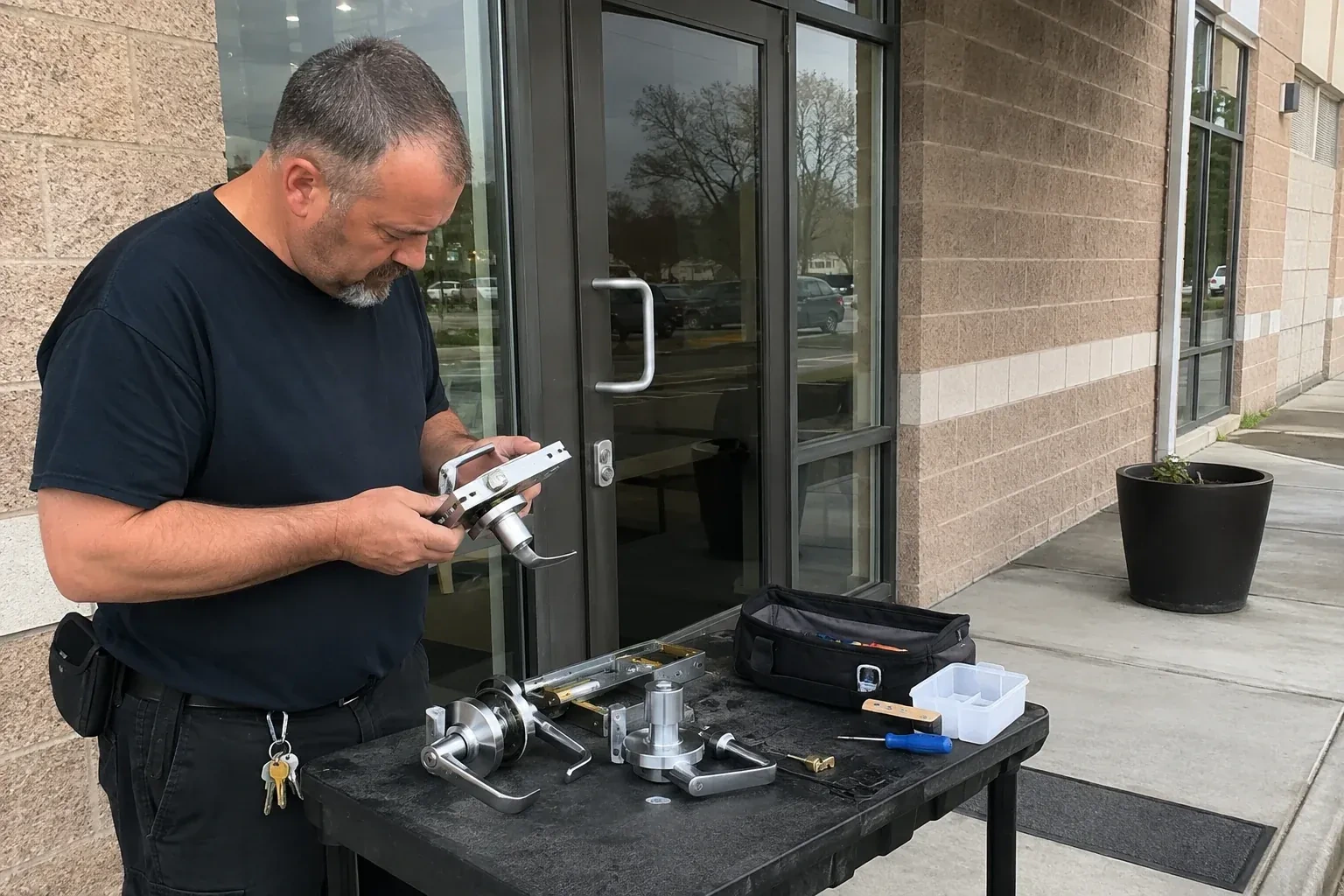
A great deal of what happens during this service is choosing the right category of hardware before a single screw comes out. Storefront glass and aluminum doors call for a narrow-stile lock or a hookbolt rather than the mortise body a solid wood or hollow-metal door would take, and a door serving a busy exit route may need listed exit hardware regardless of what was on it before. The locksmith identifies which category the opening belongs to, sources hardware built for it, installs it to the door's existing preparation, and confirms the finished lock operates correctly from both the public and the staff side.
How the visit goesOvernight someone forced the back door, and the cylinder face is scarred, the metal around the strike has pulled loose from the frame, and the latch no longer sits flush.
Commercial-Grade Lock Replacement
How the visit goes
Finding what else is already wired to the door
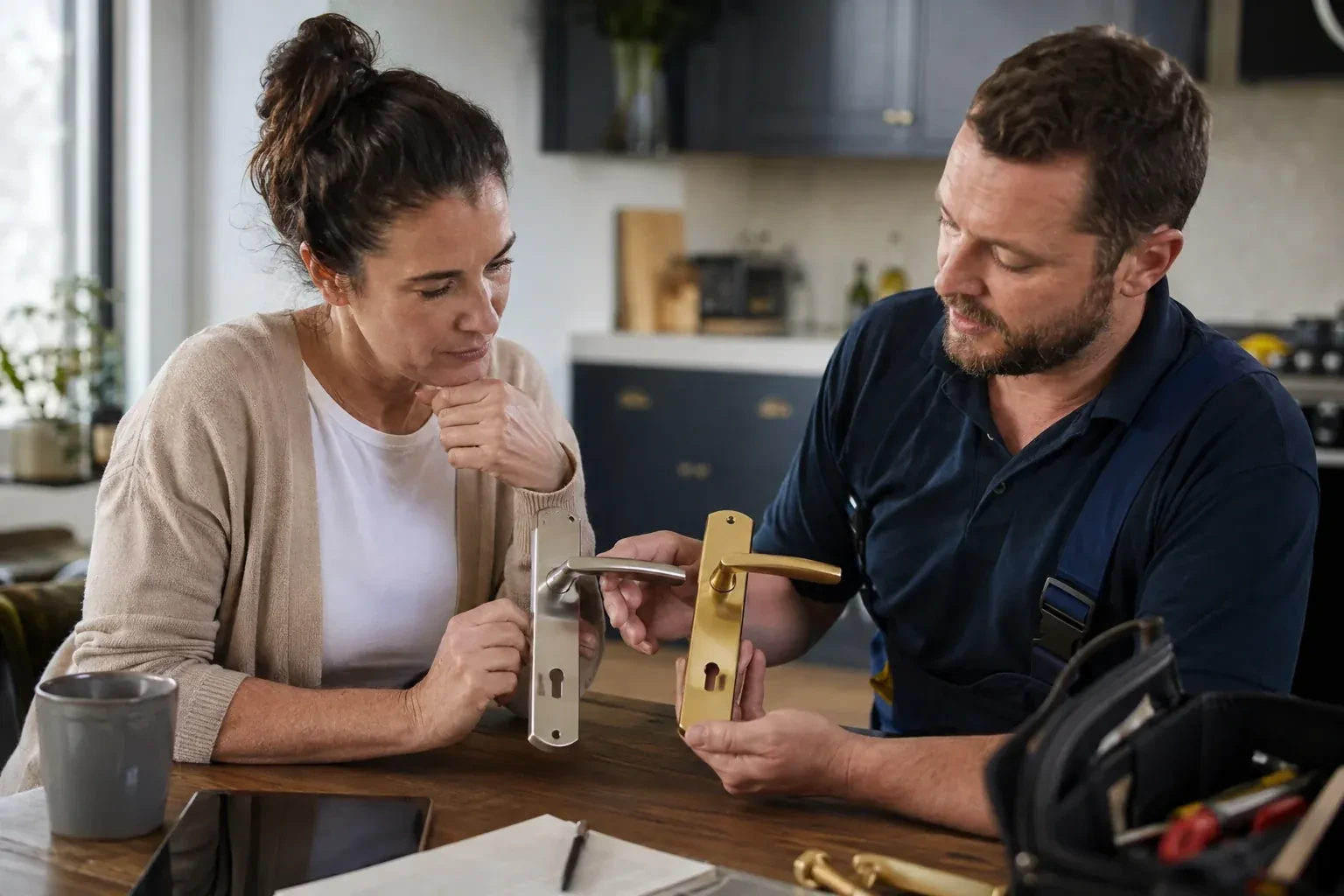
Many commercial openings carry more than a mechanical lock: an electric strike, a maglock, a door position switch feeding an alarm panel, or a card reader tied to an access-control system. The locksmith identifies everything already connected to the opening before ordering replacement hardware, since a new lock has to coexist with that wiring rather than replace it by accident. Where the connected hardware is the actual source of the problem, that gets flagged separately rather than folded silently into a mechanical lock replacement.
Connecting any electrified or access-control hardware
Where the opening already carries an electric strike, a maglock, a door position switch or a card-reader tie-in, that wiring is reconnected to the new mechanical hardware and tested together rather than assumed to still line up. Voltage, fail-safe or fail-secure operation, and monitoring contacts are confirmed against what the access-control or alarm system expects, since electrified hardware that is almost, but not quite, matched to the mechanical lock is a common source of a door that buzzes open but still needs force.
A storefront that closes the way it should
For a narrow-stile or glass storefront door, the finished job means the hookbolt or deadlatch engages fully across its travel every time, without the shoulder-check that a worn or mismatched lock used to need. Staff closing up for the night can throw the lock once and trust it caught, and the business is no longer relying on a habit of double-checking a door that should simply work. The hardware's finish is also suited to public-facing use, holding its appearance under daily handling.
Commercial-Grade Lock Replacement
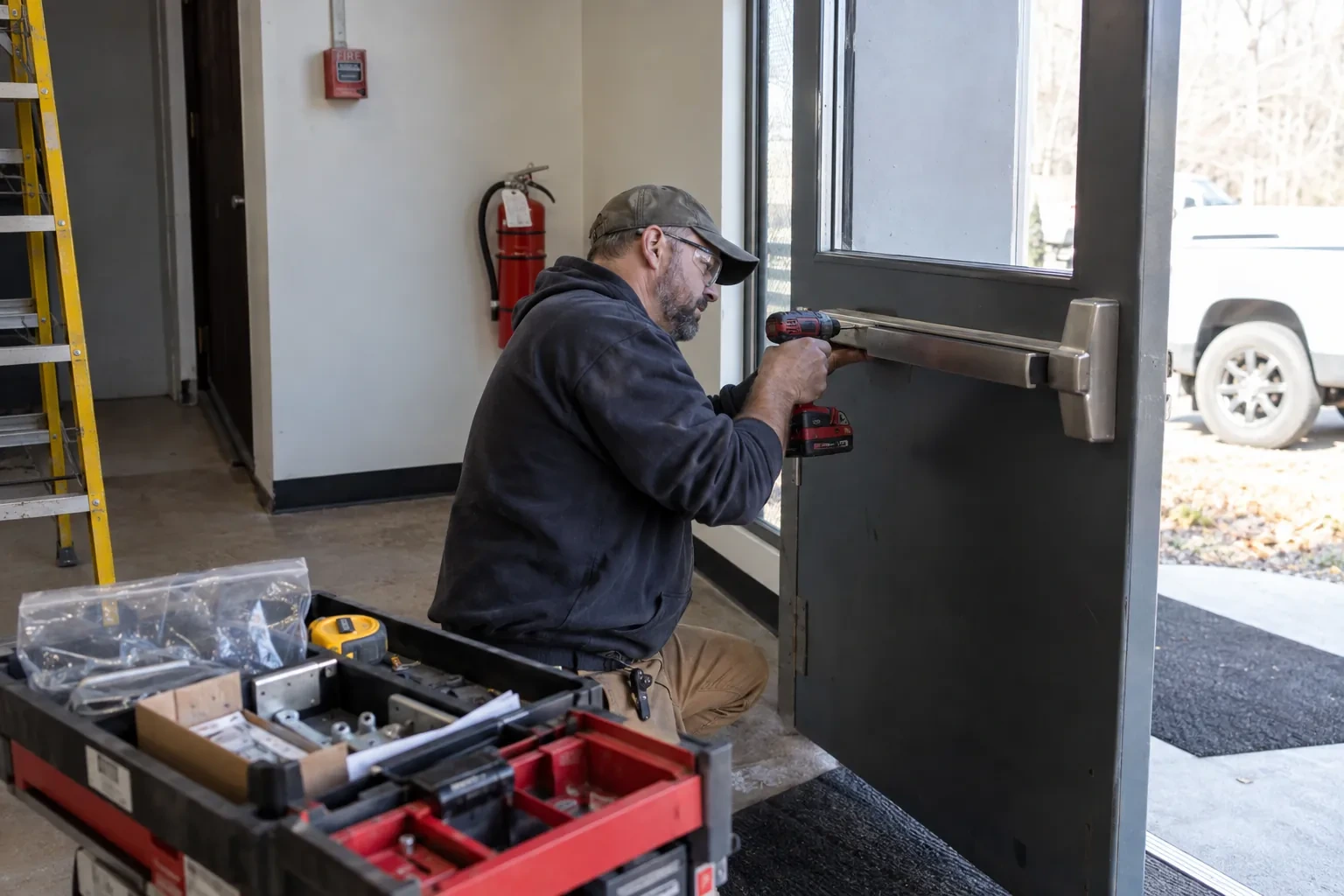
In the van
Listed panic or exit hardware
Narrow-stile storefront lock
Mortise lock body
Mortise prep and installation tools
Electric strike
Commercial-Grade Lock Replacement
What affects the quote
Number of doors involved
One entrance is the simplest case. Bringing several doors, or several branch locations, onto matching hardware or one key system in the same engagement is priced across the whole set rather than door by door in isolation.
Number of keys cut and issued
Keys are counted individually into the quote. A small office needing a handful of keys is a smaller line item than a multi-shift operation issuing keys to a large staff roster.
Keying complexity
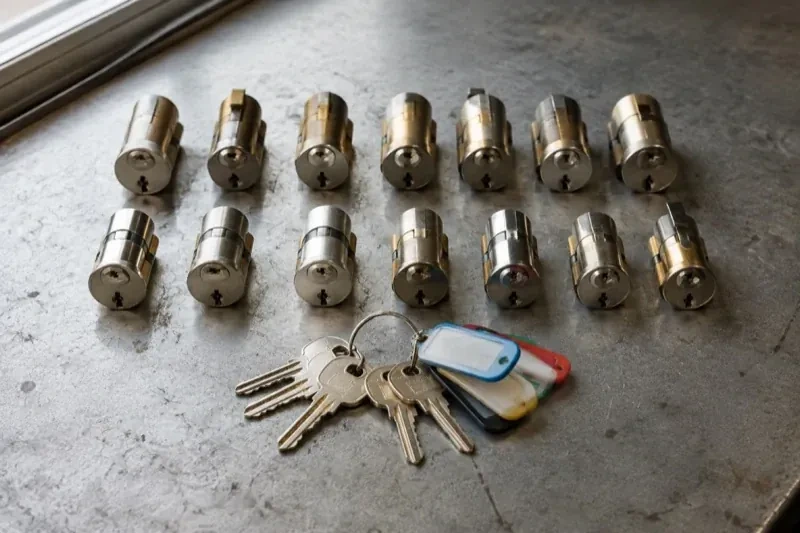
A single stand-alone cylinder is the simplest keying job. A master or grand-master structure spanning multiple doors, departments or locations takes more planning and more cylinders to combinate correctly, and that planning is part of the quote.
What to have ready
- What is currently installed: a knob, a deadbolt, a mortise lock, or an exit device?
- Roughly how many times a day does this door open?
- How many keys will need to be cut and issued?
Commercial-Grade Lock Replacement: questions
QuestionsHow do you know if my door is part of a fire separation?
The door and frame usually carry a small metal label stating the assembly's rating, and the building's own fire safety plan or a previous inspection report will identify which doors are part of a fire separation. If a label is missing or unreadable, that is worth raising with your building's fire safety plan holder before hardware is chosen, since it changes what can legally go on the door.
What makes a lock 'commercial-grade' rather than a residential one?
Commercial-grade hardware is built for far higher cycle counts and rougher daily handling than a home lock ever sees: heavier internal components, a lock body and strike designed to take repeated forceful use, and often a rating tied to an industry grading system that measures cycles and impact resistance. A residential deadbolt fitted to a busy business door tends to wear out well before its time because it was never built for that volume of use.
What should I do with the old hardware once it is replaced?
That is entirely your choice. Some businesses keep old hardware briefly in case a spare part is needed elsewhere on the same system, others prefer it removed from the site straightaway, particularly after a break-in where the damaged pieces are no longer wanted around. The locksmith can leave it with you or take it away, whichever you prefer.
Related services
- Master Key System DesignA dental office wants the front desk to lock up at night without ever holding a key to the room where patient records and controlled supplies are stored.
- Access Control InstallationThe keypad on the side door has started sticking on cold mornings, codes get shared instead of reset, and half the staff still remember a code you meant to retire two hires ago.
- Panic & Exit HardwareThe new access-control reader at the staff entrance works fine going in, but nobody has sorted out the door's exit side, and right now a card reader and a pushbar exist as two separate ideas.