Change or rekey · Mississauga
Gate & Building Entry Locks
A neighbour mentions, in passing, that the key from three tenants ago still lets him into the building's front door.
In plain words
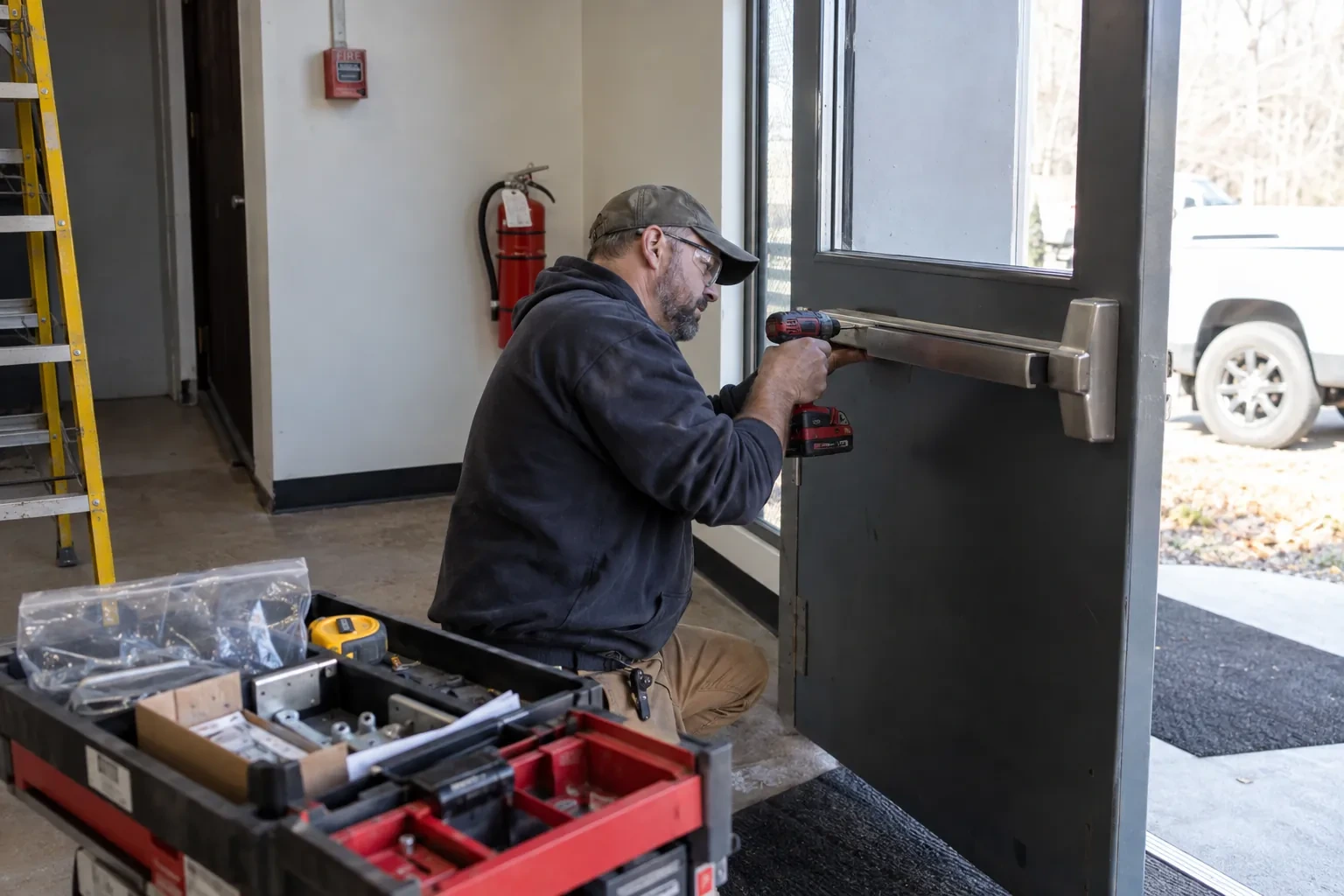
Some building entries add a buzzer, a keypad or an electric strike to the mechanical lock, and any one of those pieces can be the reason a door stops releasing on cue. This service checks the wiring, the power supply and the mechanical override together with the lock itself, rather than assuming the fault sits wherever the last person guessed. Whatever combination of electronic and mechanical hardware the entry uses, it leaves working as one system: a mechanical key still able to open it wherever the installed lock provides one, and a fail-safe strike or maglock still releasing on its own if the power ever goes out.
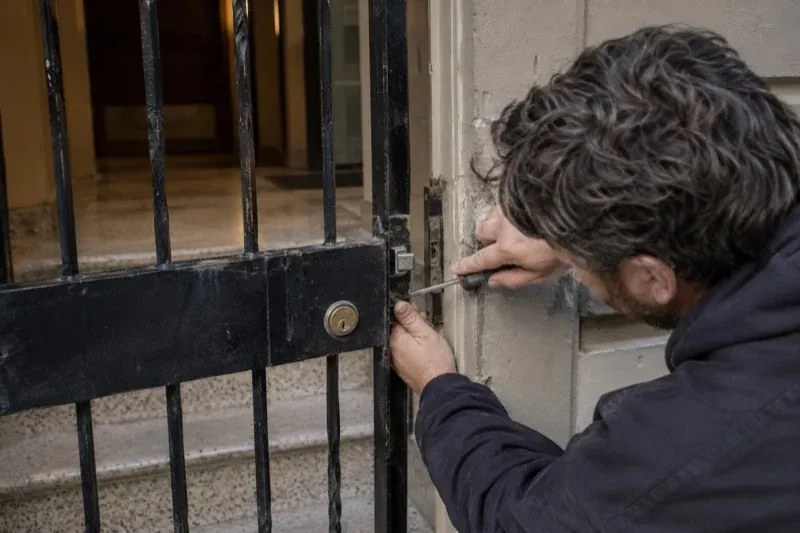
How the visit goesThe gate to the side yard used to close with a satisfying click. After a winter of frost heaving the fence post, the latch now sits a full inch below where the strike is waiting for it, and the gate swings free no matter how hard it is pulled shut.
Gate & Building Entry Locks
How the visit goes
Reading a frost-heaved or settled post
Ground movement shows up as a lock problem long before anyone thinks to blame the post. The locksmith checks whether the gate post has lifted, tilted or settled relative to the latch post it is supposed to line up with, and by how much, since a small seasonal shift is different from a post that has genuinely moved for good. This distinction decides whether the fix is resetting the strike position for now or addressing the post itself, and it keeps the same misalignment from returning with the next frost.
Repairing damage from an earlier attempt or a break-in
Where the gate or door shows signs of prying, cutting or a spun cylinder, the damaged hardware is removed and assessed on its own before anything is rebuilt: a bent strike is straightened or replaced, a compromised cylinder is swapped rather than trusted, and a cut hasp or shackle is replaced with a heavier one if the original was clearly overmatched. The surrounding wood or metal gets checked too, since forced entry often stresses the frame as much as the lock. The finished gate or door is tested to confirm it closes, latches and locks exactly as it should.
A post and frame that hold their position
Where ground movement had thrown the gate out of line, you leave with a post that has been reset, packed or braced so it stays where it was put, not just a strike that was shimmed to match wherever the post happened to be that day. The gate should now close consistently through the seasons rather than needing a fresh adjustment every time the ground shifts. Check it again after the next hard frost or a wet spring, since soil movement is ongoing rather than a one-time event.
Gate & Building Entry Locks
In the van
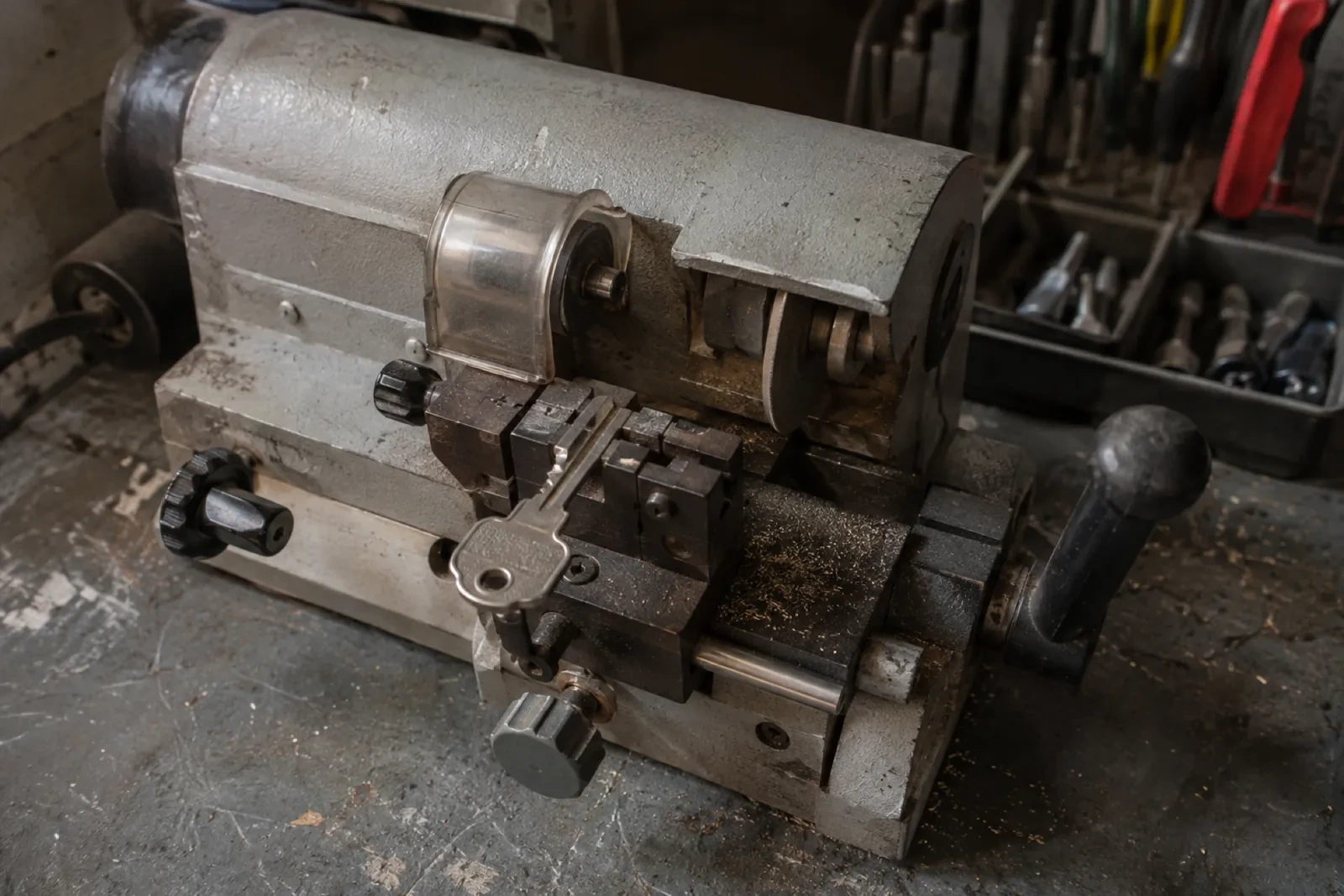
Key blanks and code cutter
Corrosion-resistant fasteners
Keyed-alike cylinders
Gate and door closers
Strike plates and keepers
Gate & Building Entry Locks
What affects the quote
Materials the gate or frame is built from
Wood, wrought iron, aluminum and vinyl gates each take fasteners and mounting approaches suited to that material, and matching the lock and closer correctly to the gate's construction is part of what the quote covers.
Access to the gate or entry
A ground-level gate on an easy driveway is straightforward. A shared building entry behind a locked lobby, a gate at the far end of a long property, or awkward scaffolding around the hardware adds time the quote takes into account.
Whether keys need coordinating across doors
Rekeying a single lock is one task. Bringing several gates or a shared entry onto one common key, or setting up a master key arrangement across a property, adds planning and cylinder work beyond a single rekey.
What to have ready
- Is this a single household gate or a shared building entry?
- Which gate or door is giving you trouble?
- Do you manage this property, or should someone else be involved in the decision?
Gate & Building Entry Locks: questions
QuestionsDoes this service cover the gate itself, or only the lock?
Both, where the two are connected, which on a gate they usually are. A locksmith working on a gate lock also looks at the hinges, the post and the closer, since a lock rarely fails on its own when the real cause is a sagging gate or a post that has shifted. Work that goes beyond hardware the locksmith carries, such as rebuilding a rotted post or a damaged fence panel, is flagged so it can be handled by whoever normally does that kind of repair.
What is a good option for a gate that delivery drivers or a maintenance crew need occasional access to?
A keypad or a lockbox with a rotating code works well there, since access can be shared without handing out a physical key that has to come back later. A weather-rated cylinder with a separate access key is another option if the property already runs on a keyed system. The locksmith can talk through how often the code should change and who on site should know it, so the gate stays convenient without staying open to everyone.
A tenant moved out of our building. Do we need to rekey the shared entry?
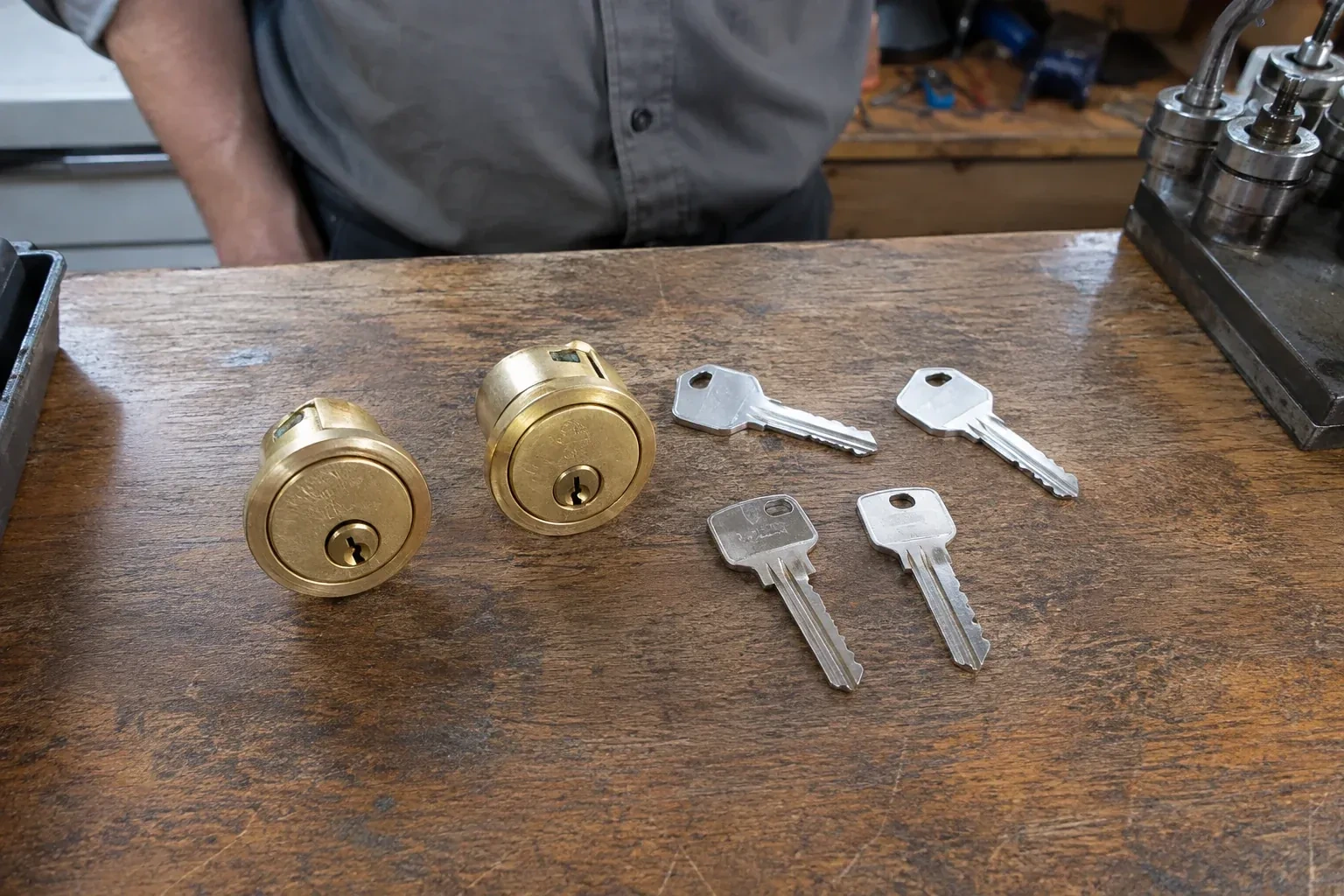
It is worth doing, since a move-out is exactly the situation a rekey is meant to cover: a former tenant's key still operates the same lock everyone currently living there relies on. Rekeying resets the cylinder to a fresh combination and issues new keys to current residents, without requiring a whole new lock in most cases. Bringing any other gates or doors that share that key along at the same time keeps the whole property on one current combination.
Related services
- Deadbolt InstallationYou bought a keypad deadbolt online and pulled the old one off, only to find the hole in the door is a different size and the bolt latch sits at a backset the new kit does not list.
- Lock Replacement & UpgradeEvery morning the front door key needs the same little dance: push in, lift, wiggle, turn.
- Vintage Mortise Lock ServiceThe knob flops loose on its spindle and never springs back to level.