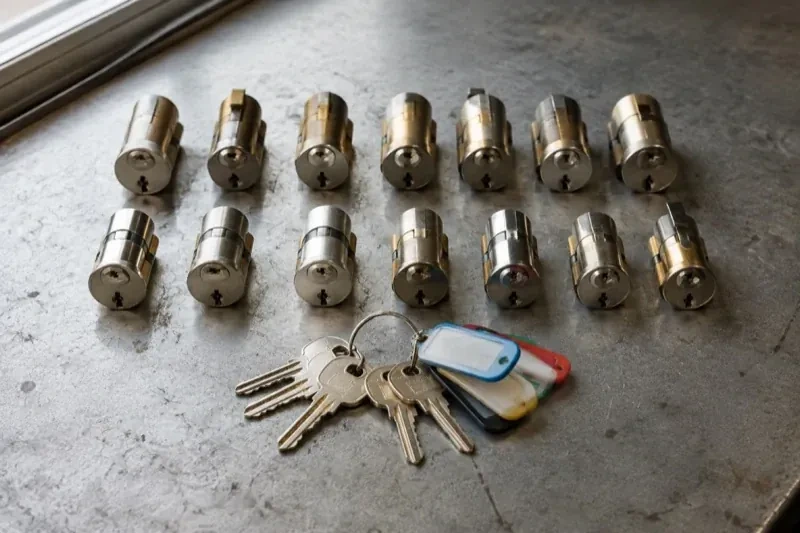

Commercial · Mississauga
Master Key System Design
A dental office wants the front desk to lock up at night without ever holding a key to the room where patient records and controlled supplies are stored.
In plain words
A master key hierarchy usually has three layers. At the bottom, an individual change key opens one door or a small keyed-alike group for the person who needs it. In the middle, a sub-master opens a defined group, such as every door on a floor or in a department. At the top, a single master opens the whole set and is kept to a short list of people. Master key system design is the process of deciding where those layers sit for a particular business, choosing hardware that can support them, and cutting and testing the keys so each layer works exactly as planned, no more and no less.
How the visit goesThe office key ring has become the org chart. Every manager carries a fistful of cuts, a couple of staff hold copies nobody remembers issuing, and when someone asks which key opens the records room, three different people give three different answers.
Master Key System Design
How the visit goes

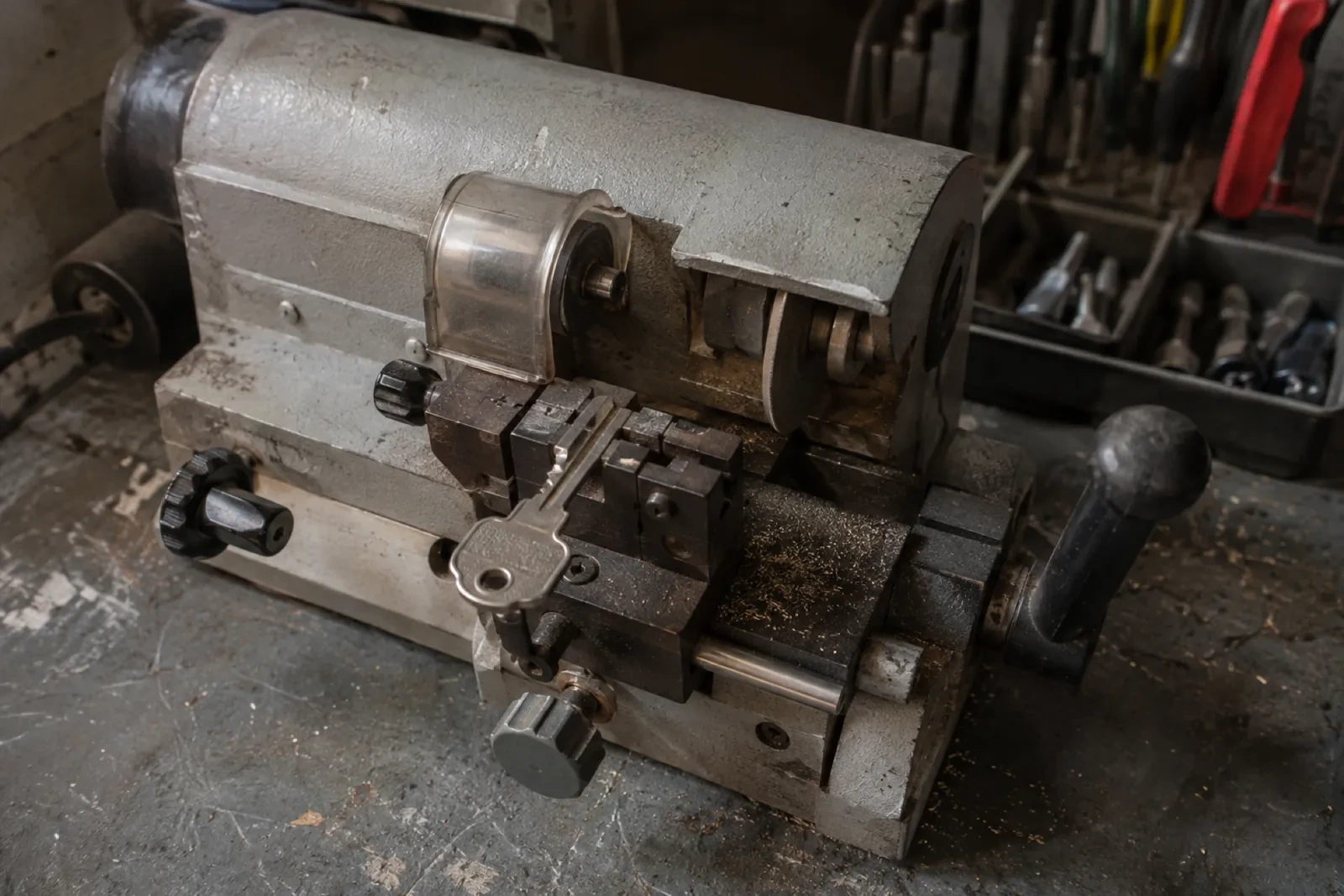
What the current keys can already tell you
Before anything is redesigned, the locksmith reviews the keys already in circulation: how many exist for each door, which ones are stamped or coded in a way that identifies what they open, and which staff members currently hold more access than their role calls for. This review often surfaces the exact problem the new system needs to fix, whether that is a master key copied one time too many or a department that was folded into another without anyone updating who could get in.
Bringing electronic and mechanical access into one plan
Where a property mixes mechanical cylinders with keypad or card-based doors, the mechanical hierarchy is designed to line up with the electronic access groups rather than run as a separate, unrelated system. A department that sits at one sub-master level on the mechanical side is kept at a matching level on any electronic doors it also uses, and any mechanical override cylinders behind an electronic lock are pinned into the same chart as every other door, so one document still describes the whole property.
A chart that answers the question on its own
Once the project is finished, a single question, who can get into this room, has a single answer, visible on the chart without needing to track down whoever issued a key years ago. Every level is listed against the doors it opens and the people or roles holding it, so the record stays useful long after the locksmith has left, rather than fading into the same guesswork the project was meant to replace.
Master Key System Design
In the van
Key cutting machine
Locking chart storage cabinet
Restricted or standard key blanks
Plug follower and key gauge
Keying chart
Master Key System Design
What affects the quote
Working around an occupied, operating property
Rekeying doors in a planned sequence so a business keeps operating throughout, rather than all at once, takes coordination with the owner's schedule. Properties that need this staged approach, with interim arrangements for doors mid-conversion, add planning time beyond a straightforward, all-at-once installation.
Condition of the property's current keys
A property with a reasonably current, if informal, sense of who holds which key gives the assessment a shorter starting point than one where keys have been copied and reissued for years with no record at all. More reconstruction work at the start affects the overall quote.
Whether hardware needs replacing for accessibility
Doors on a barrier-free path of travel need lever or paddle-style hardware rather than round knobs, so a property with several such doors that currently have incompatible hardware has more replacement work folded into the project than one already fitted with compliant hardware.
What to have ready
- Do any existing keys already open more than one door?
- Roughly how many doors need to be part of the system?
- Are new departments, hires or locations expected in the near future?
Master Key System Design: questions
QuestionsWhat happens if a master-level key goes missing?
The current chart shows exactly which doors that level was designed to reach, which for a lost top-level master can mean the whole property rather than one group. Depending on how the key was lost and who else already holds that level, the usual options are repinning the affected cylinders and reissuing keys to the remaining holders; a restricted keyway lowers the odds of an unauthorized copy being cut but is not proof that one has not been made. Without a current chart, the first task is reconstructing that scope.
Can key duplication be restricted so copies cannot be cut elsewhere?
Yes. With a restricted or patented keyway, blanks are only available through the manufacturer's authorized record, so a copy is not cut at an ordinary hardware counter without going through that channel. This does not make a key impossible to duplicate, but every legitimate copy passes through a record the owner controls, which a standard keyway cannot offer.
How do you decide how many sub-master levels a business actually needs?
The number follows the organization, not a preference for tidy diagrams. Genuinely distinct groups, such as separate departments or floors with different access needs, each justify a level; access differences that exist only on paper usually do not. A hierarchy with more levels than the business uses in practice is harder to administer without making anyone's day-to-day access meaningfully better.
Related services
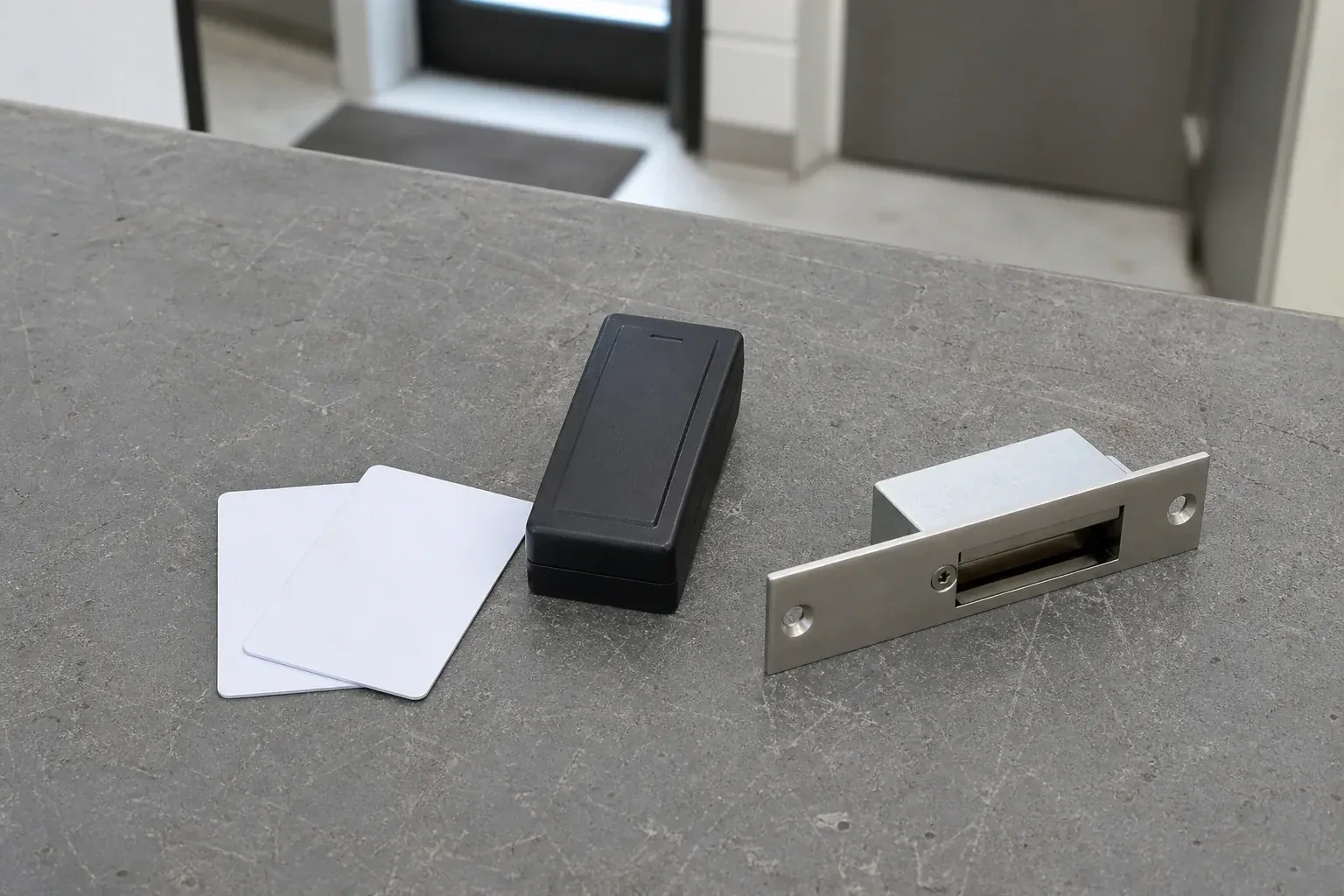
- Access Control InstallationThe keypad on the side door has started sticking on cold mornings, codes get shared instead of reset, and half the staff still remember a code you meant to retire two hires ago.
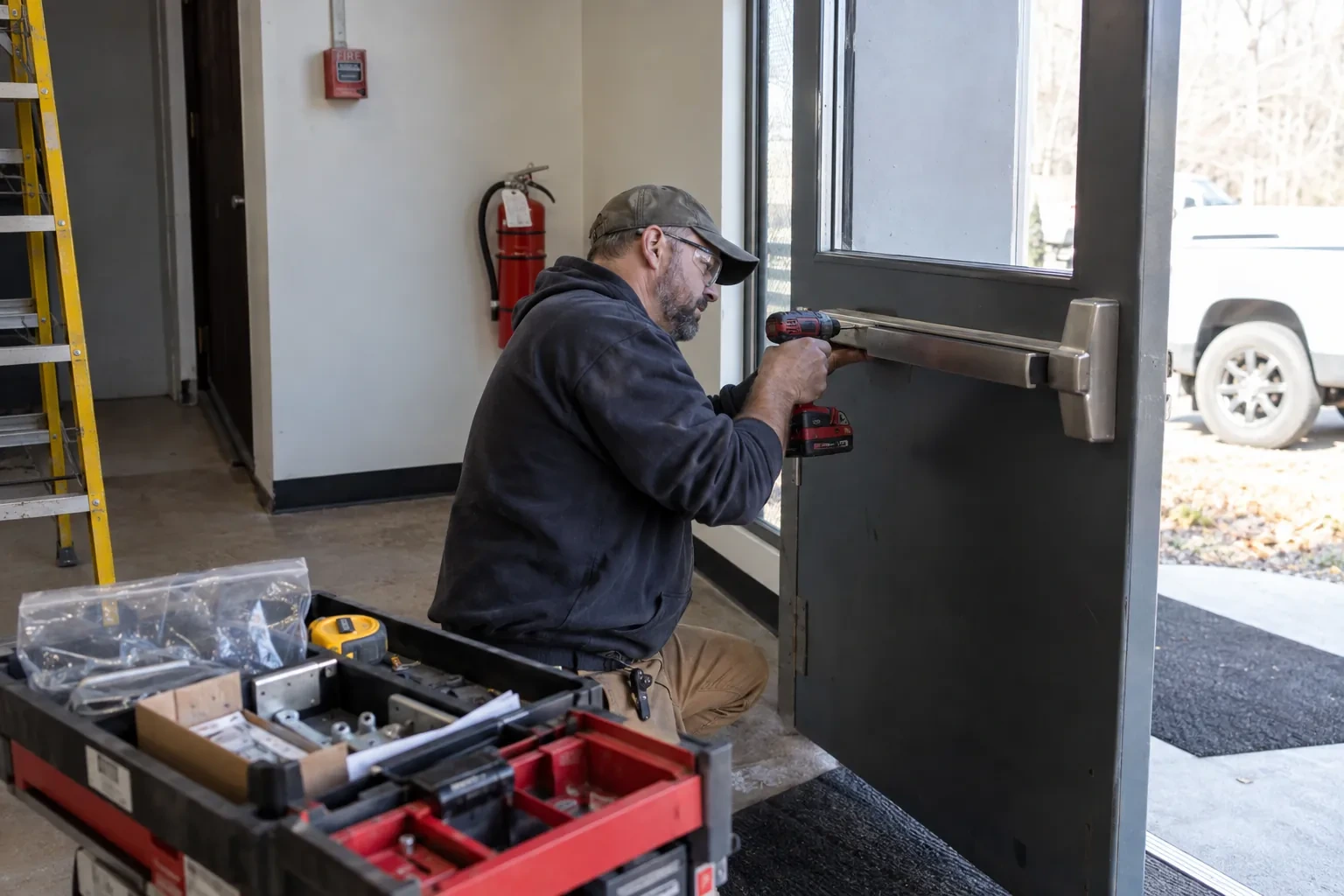
- Panic & Exit HardwareThe new access-control reader at the staff entrance works fine going in, but nobody has sorted out the door's exit side, and right now a card reader and a pushbar exist as two separate ideas.
- Commercial-Grade Lock ReplacementThe kitchen delivery door gets shouldered open more than a hundred times a shift, and lately the latch slips past the strike plate instead of catching it on the first push.