High security · Meadowvale Village
Safe Installation & Servicing in Meadowvale Village
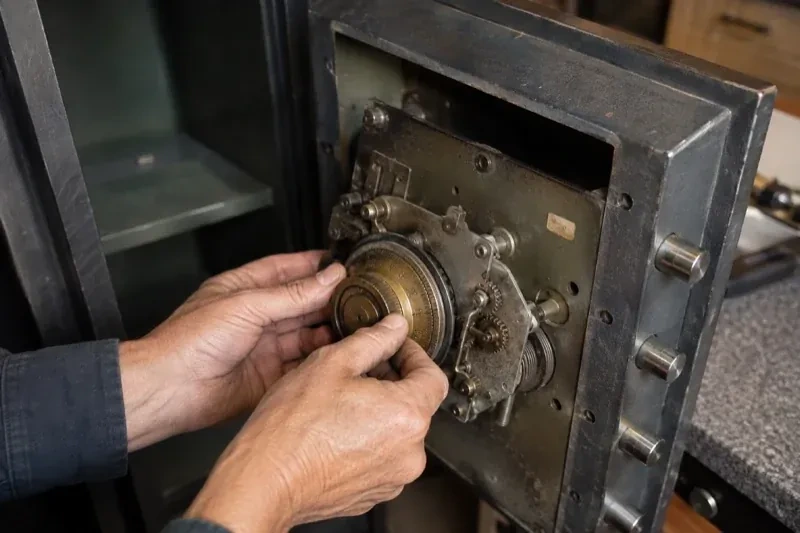
A homeowner inherited a heavy old dial safe from a parent's house, moved it into the new place, and has no idea whether the bolt-work still works, whether the lock is sound, or how it should be anchored.
In plain words
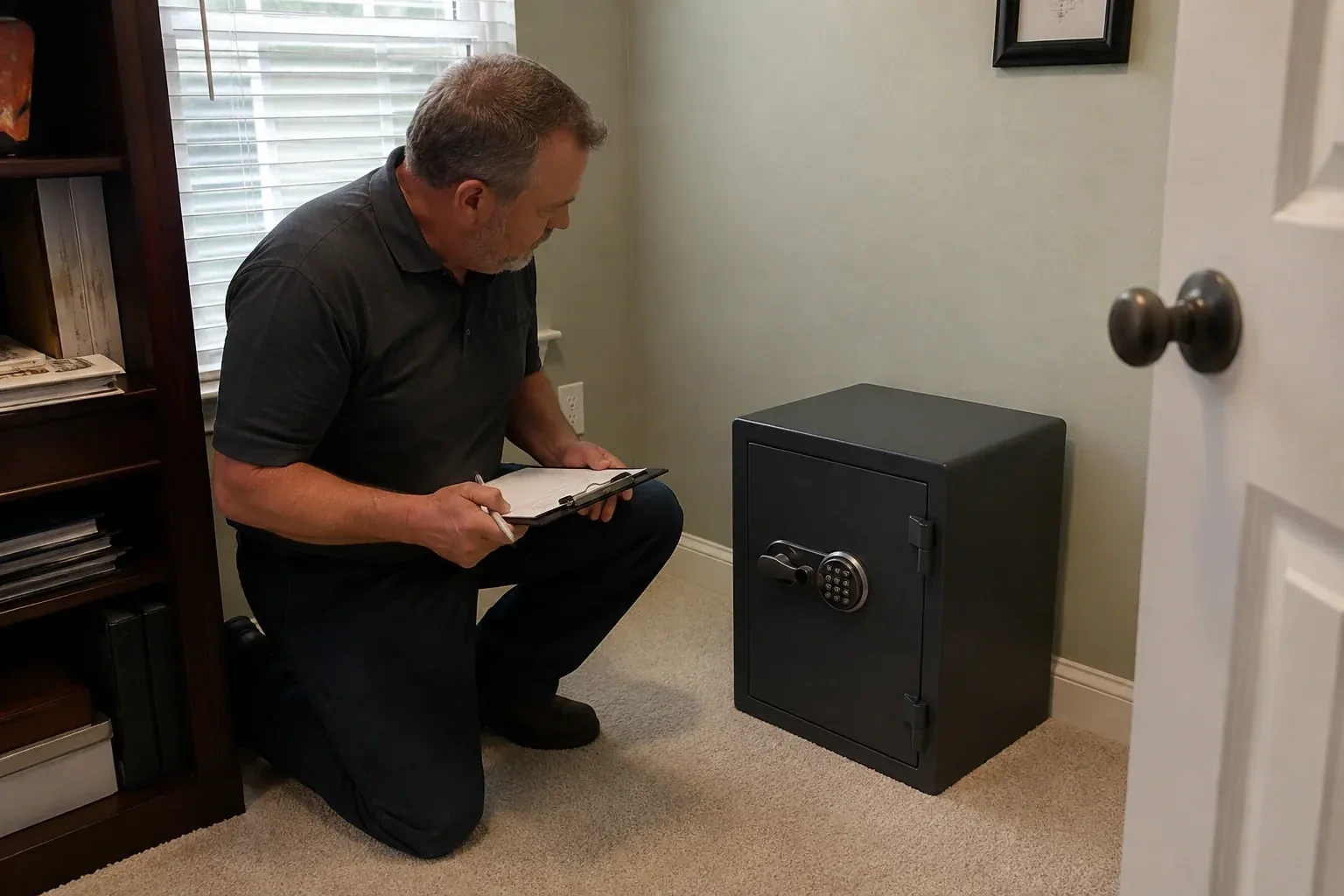
For a household bringing in its first real safe, the service covers everything between the empty spot on the floor and a working, anchored unit with a combination only the family knows. The locksmith walks through what the safe needs to hold, checks the floor or wall it will sit against, positions and levels it, and secures it with anchor bolts suited to that surface. The lock is set and cycled several times with the owner watching, so the last step of the visit is confirming, together, that it opens and closes exactly as it should.
How the visit goesA homeowner inherited a heavy old dial safe from a parent's house, moved it into the new place, and has no idea whether the bolt-work still works, whether the lock is sound, or how it should be anchored.
Safe Installation & Servicing
How the visit goes
Getting a heavy unit to its final spot
A commercial safe can weigh several hundred pounds before anything is inside it, so the route from the door to the final position matters as much as the safe itself. The locksmith measures doorways, hallway turns, stairs, and any tight corner along the path, and checks whether an elevator, loading dock, or ramp is involved. A safe that cannot clear a doorway in one piece, or a floor that struggles to bear that weight partway up a building, changes the plan before delivery day rather than becoming a problem on site.
Bringing an existing safe back into full working order
Servicing starts with the bolt-work: the mechanism is opened, cleaned of old grease and grit, and lubricated with a product suited to steel bolt-work rather than a general household oil. The lock is cycled repeatedly and adjusted if it binds or hesitates, and any handle or spindle that has worked loose is tightened. Batteries in an electronic lock are replaced as routine maintenance rather than waiting for a failure, and the door seal and hinges are checked and freed if they have picked up rust.
A safe that is genuinely fixed in place
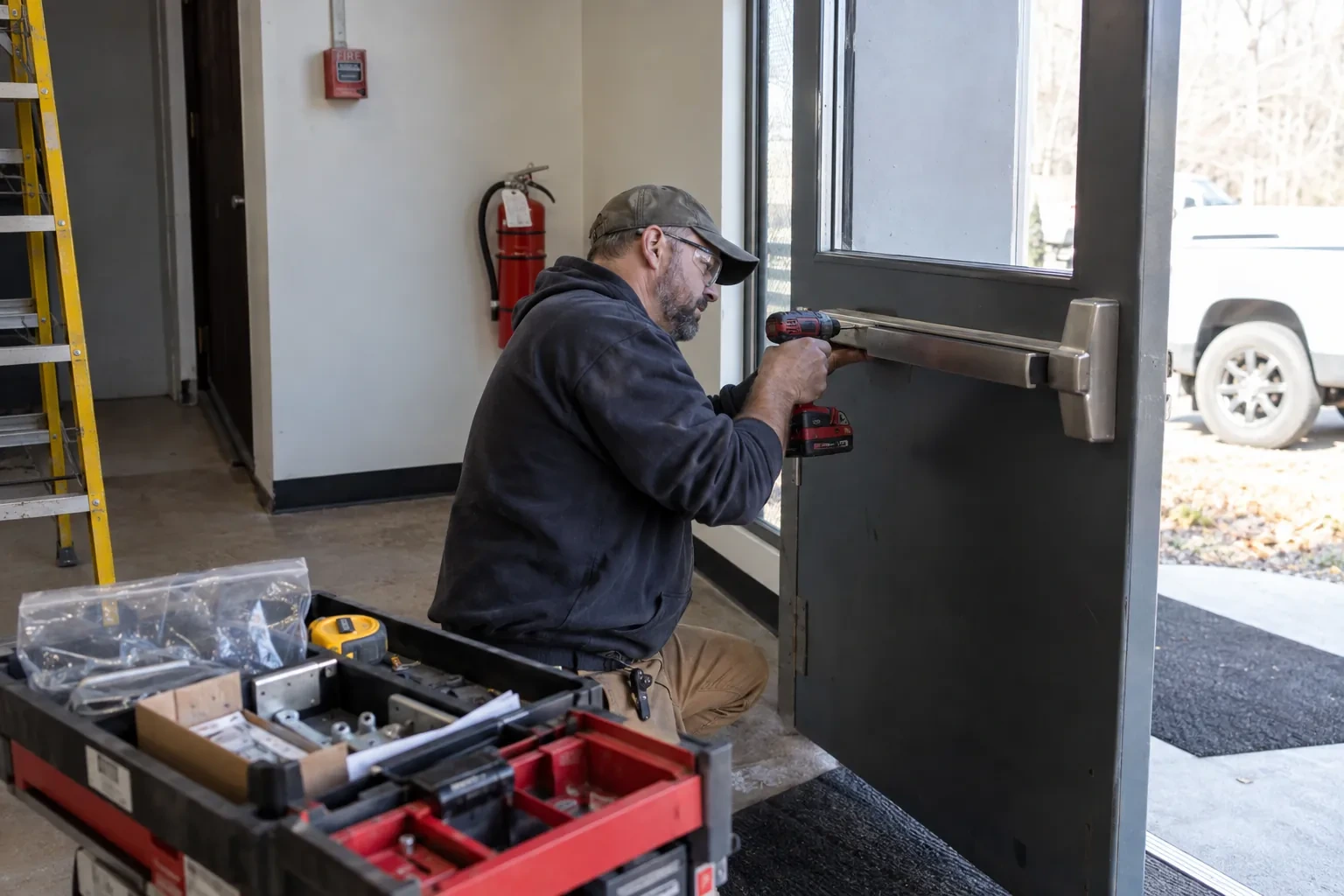
By the end of the visit, the safe sits level, anchored to the floor or wall with hardware matched to that surface, and tested by hand to confirm it does not rock, tip, or shift. Anyone trying to remove it would need to defeat the anchoring itself rather than simply lifting the unit and carrying it elsewhere. The owner is shown exactly where the anchor points are and told what was used, in case a future move or renovation needs to account for them.
Safe Installation & Servicing
In the van
Concrete anchor bolts
Nine-volt backup battery
Hammer drill and masonry bits
Wood subfloor lag bolts and washers
Torque wrench and socket set
Safe Installation & Servicing
What affects the quote
New installation versus servicing an existing unit
Fitting a brand-new safe involves positioning, anchoring, and lock setup from scratch, while servicing an existing one focuses on bolt-work, lock testing, and confirming or adding anchoring, generally a shorter list of tasks.
An insurer's or head office's stated requirement
Some businesses are told by a policy or a head office exactly what rating a safe on the premises needs to meet, which narrows the choice of unit before other factors are weighed.
Floor or wall construction
Solid concrete, a wood subfloor reaching into joists, and tile each call for a different anchoring approach and different hardware, and the substrate is confirmed before any drilling begins.
What to have ready
- Are there stairs or narrow doorways between the entrance and that spot?
- What floor or wall will the safe sit against?
- Does the lock use a dial, a keypad, or both?
Safe Installation & Servicing: questions
QuestionsWill anchoring damage my flooring?
Anchoring leaves small holes at the anchor points, sized to the bolts being used, and on a finished floor these sit under the safe itself where they are never seen again. On tile, the risk of cracking nearby tiles is real enough that an alternative fastening point or a different spot in the room is often chosen instead of drilling straight through the tile itself.
Why does the inside of my fireproof safe feel damp?
A fire-rated interior works by sealing tightly, and that same seal traps ordinary household humidity over time with nowhere to go. Opening the door for a few hours every few weeks lets trapped air exchange with the room, and a desiccant packet inside absorbs moisture between those openings if it is refreshed on schedule. A musty smell or a soft-feeling document is the interior telling you it needs airing out.
Can a safe be concealed inside a closet or behind a panel?
Yes, provided the spot chosen still allows full anchoring and enough clearance for the door to swing open completely. A closet floor, the back of a built-in cabinet, or a recessed wall cavity can all work, though each limits the size of unit that will actually fit and reach the anchor points properly. Balancing concealment against how often the safe gets opened is worth discussing before a spot is chosen.