Car keys · Mississauga
Vehicle Lock Repair
Your key turns smoothly in the driver's door, the same as it always has, but the button underneath stays down and the latch never releases.
In plain words
Which lock is affected shapes the whole visit. A door that will not respond to the key usually points to the cylinder or the linkage rod behind it, a trunk or hatch that spins without opening points to a worn or disconnected cam, and a door that ignores the remote but still answers the key points to the power actuator rather than the lock itself. Reading the symptom correctly narrows where to look before the panel comes off, and checks of lock position, fit, cable routing, connectors and the harness follow before the repair settles on the part that failed, rather than replacing hardware that was never the issue.
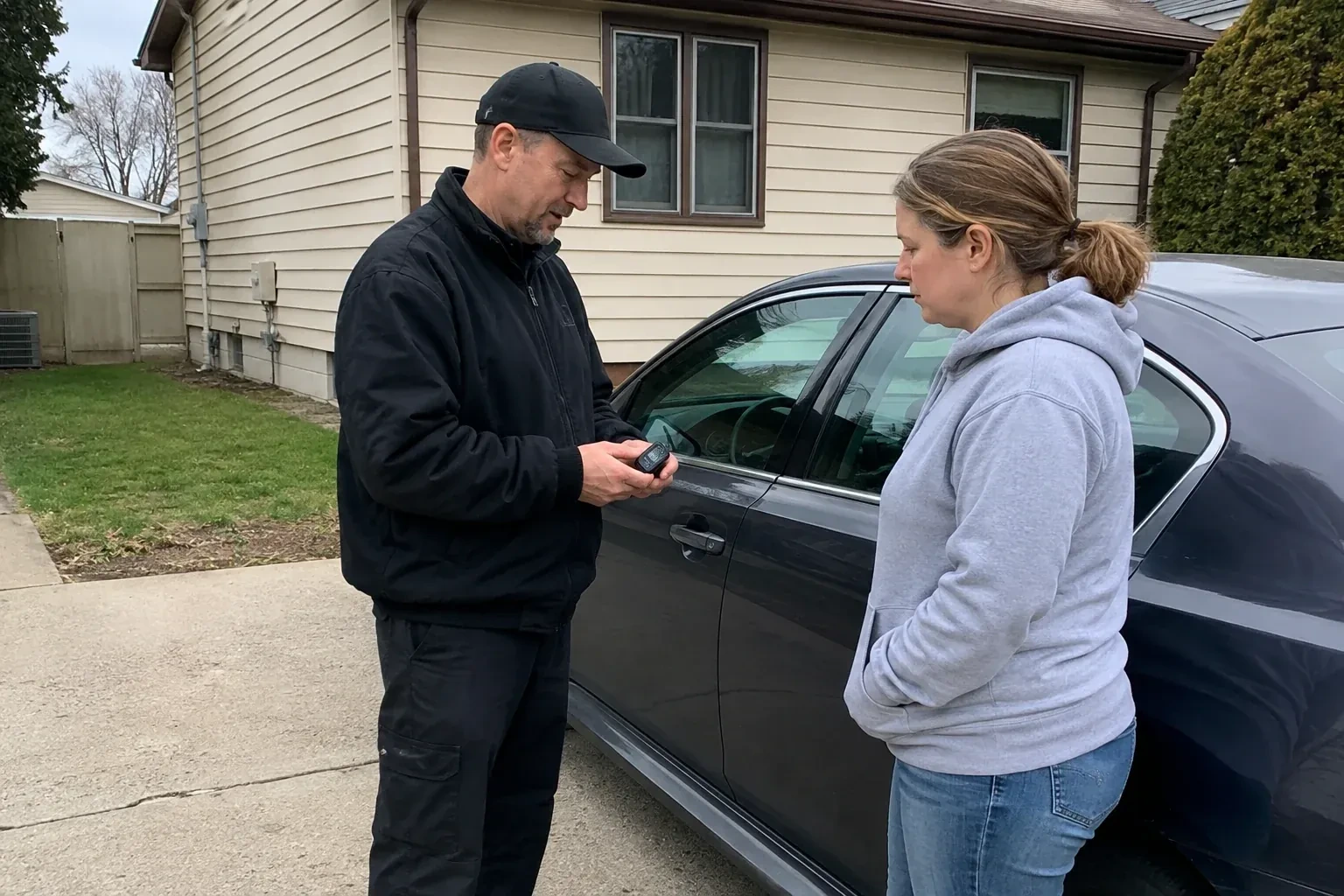
How the visit goesYour key turns smoothly in the driver's door, the same as it always has, but the button underneath stays down and the latch never releases. The passenger side opens without any trouble, so the key itself is clearly not the source of the trouble.
Vehicle Lock Repair
How the visit goes
Which lock, and how it is behaving
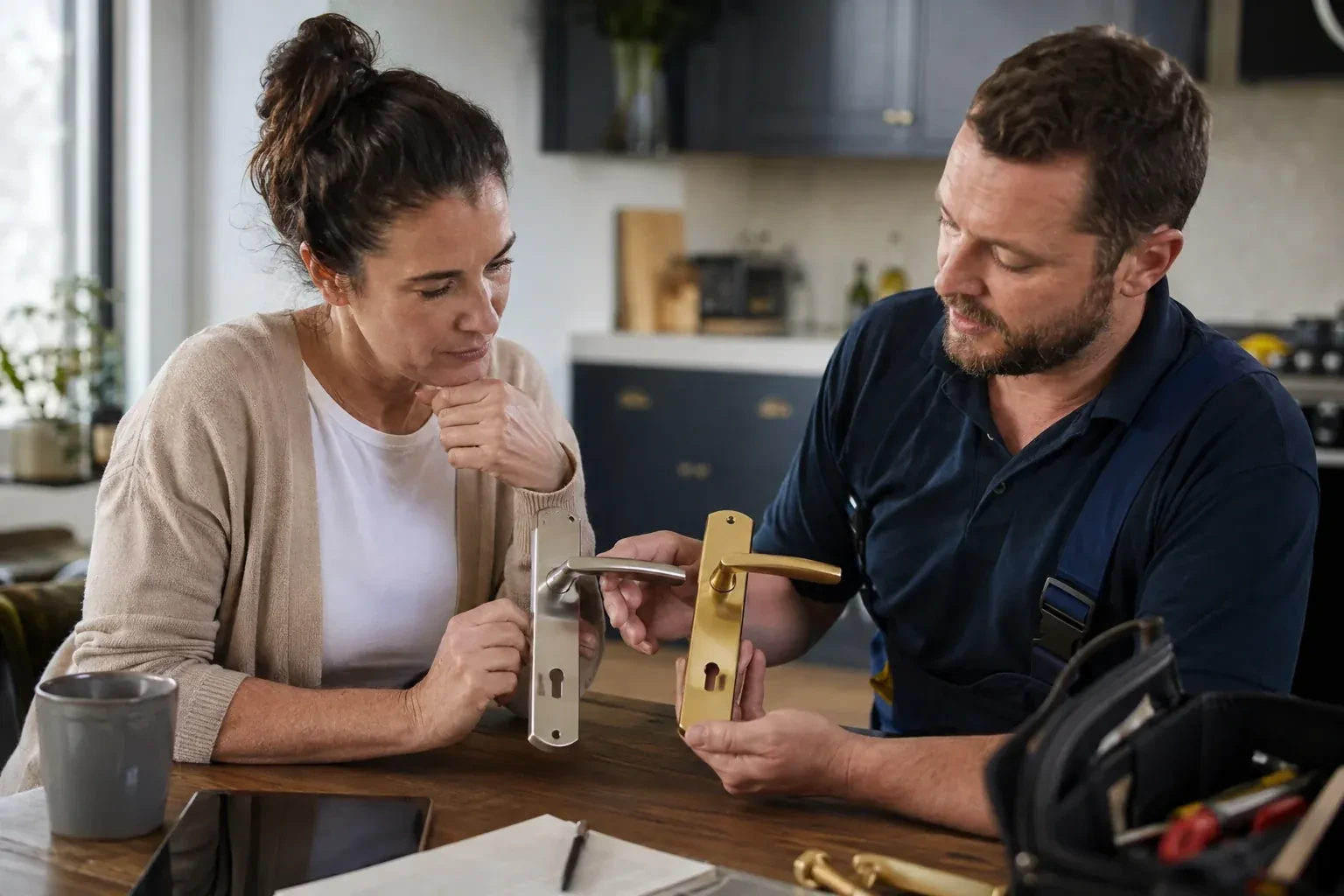
The next question narrows things down: is it a door, the trunk or hatch, or a storage compartment, and does the key turn without effect, resist turning altogether, or simply refuse the remote while still answering by hand? Each answer points toward a different part. A key that spins without engaging the latch suggests a linkage problem behind the cylinder, while a lock that ignores only the remote suggests the actuator or its wiring rather than the mechanical side.
Restoring the key fob
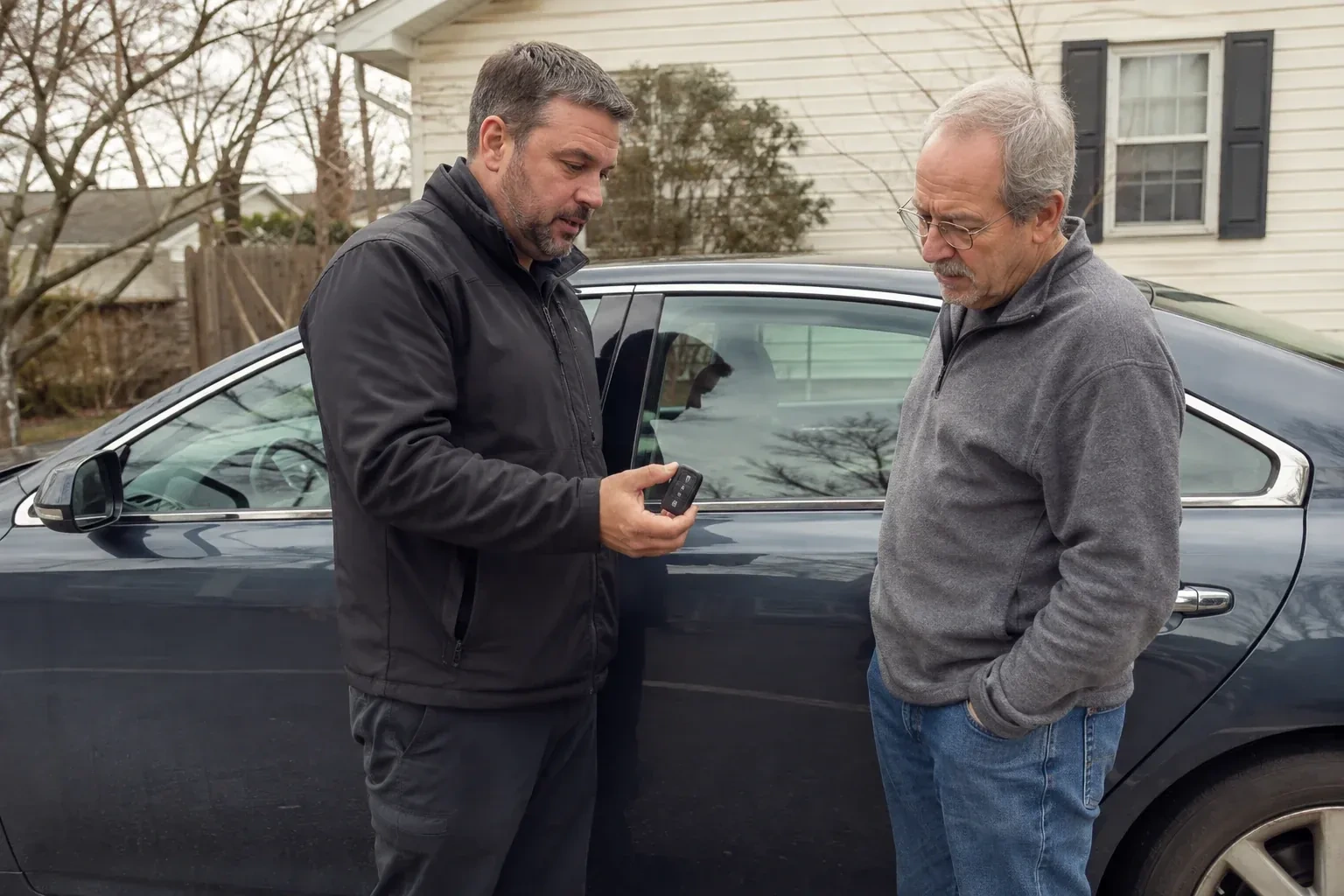
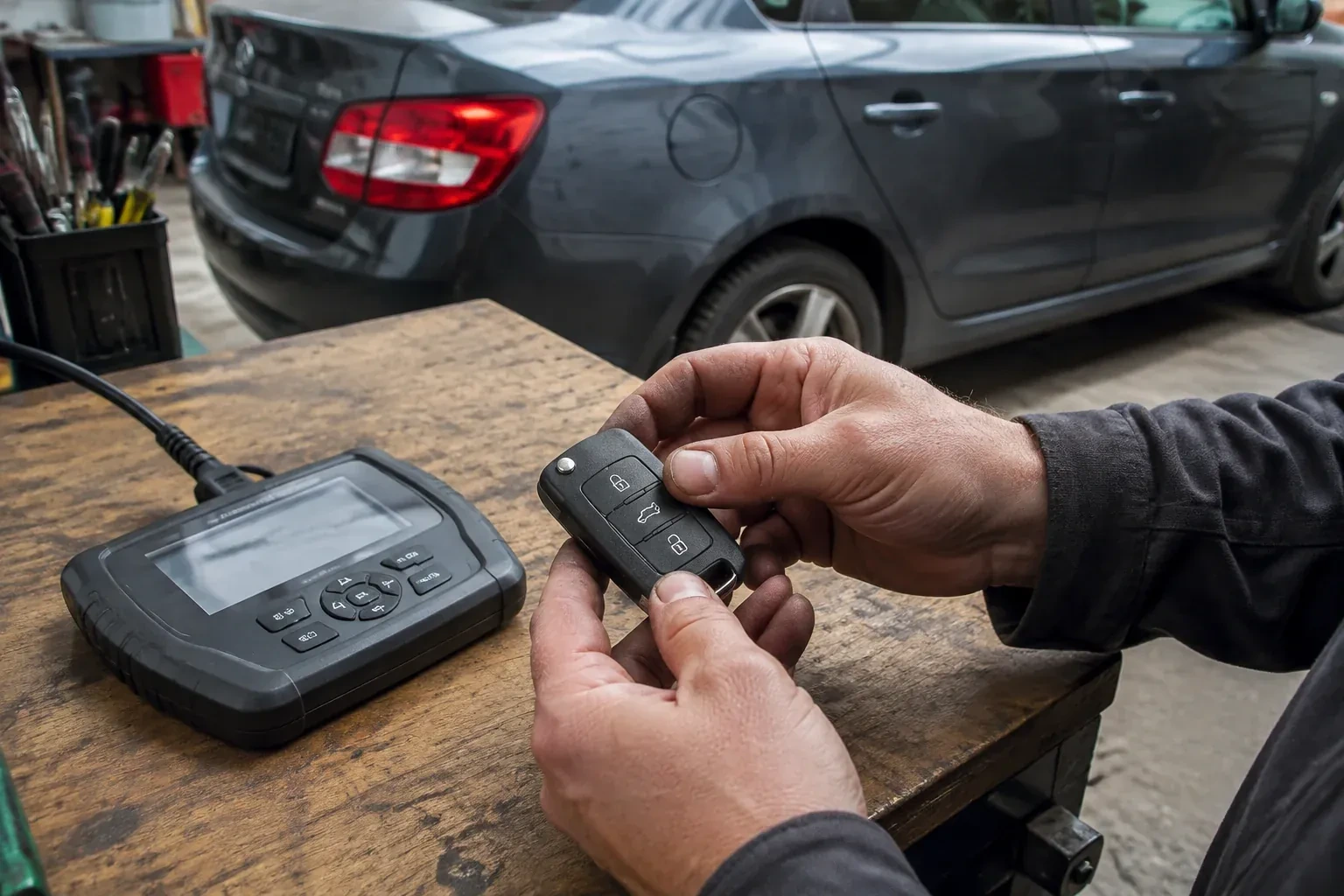
A fob that has gone quiet gets a fresh coin-cell battery first, matched to the size the manufacturer specifies, and the buttons and case are checked for cracks that could be letting in moisture. If the vehicle no longer recognizes the fob's signal at all, the locksmith re-pairs it using the vehicle's own procedure, or supplies and pairs a replacement fob where the original cannot be recovered.
A central locking set that behaves as one
With the failed link repaired, the central locking system should now behave the way the vehicle is designed to: every door meant to move together does so on a single press of the fob or turn of the key, and any door, trunk or tailgate meant to unlock separately still does. Testing this from a short distance away, the way you normally approach the vehicle, confirms the fix holds under real use rather than only when standing right at the door.
Vehicle Lock Repair
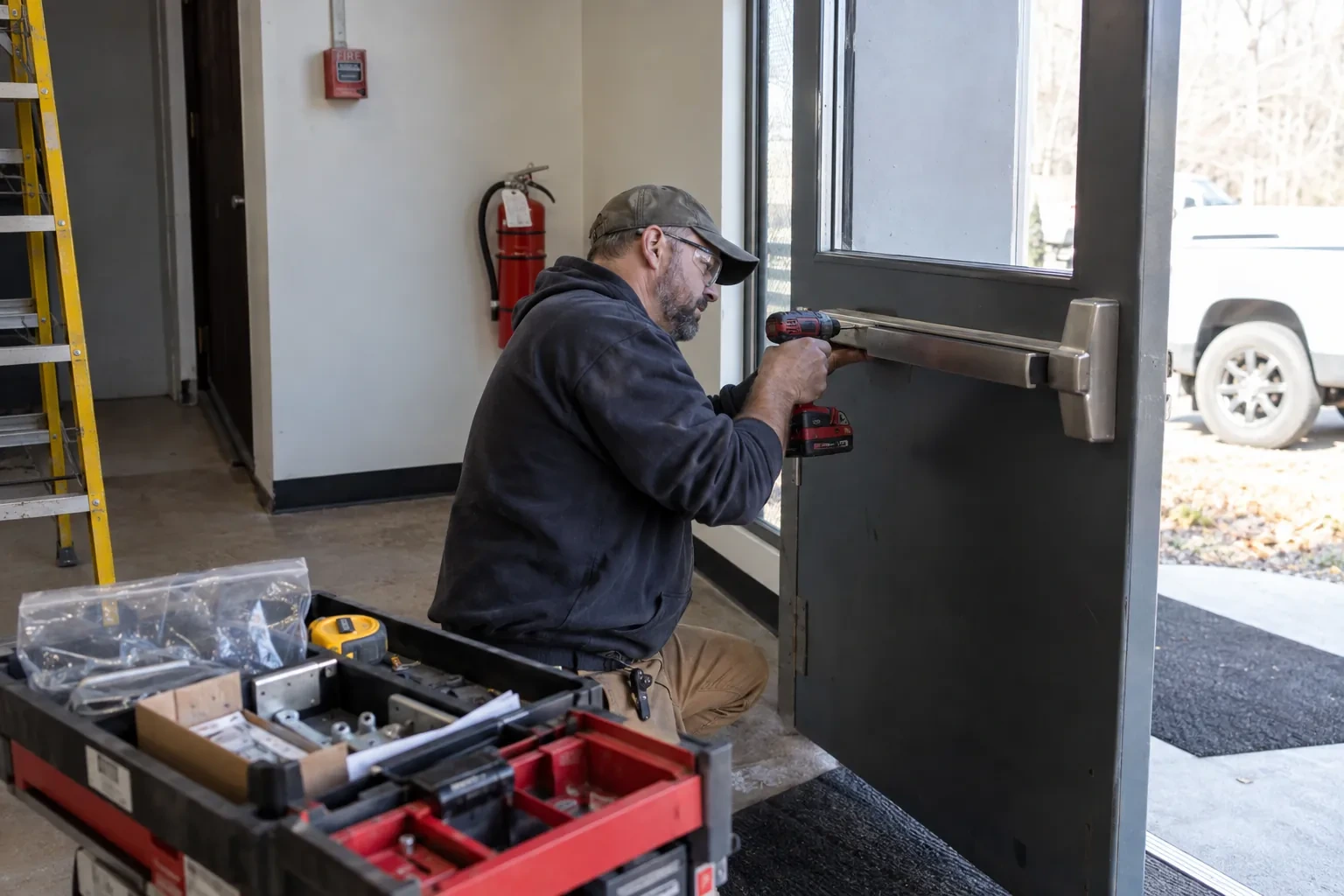
In the van
Power door lock actuator
Transponder chips
Weatherstripping and seal sections
Trim panel removal tools
Dry lock lubricant
Vehicle Lock Repair
What affects the quote
Weatherstripping or seal replacement
When a perished seal is contributing to the lock fault, replacing or resealing that section of weatherstripping is quoted as its own item alongside the lock repair itself.
Central locking versus a single door
A fault confined to one lock is more contained than one that involves the vehicle's central locking module or wiring shared across several doors, which takes longer to trace and quotes accordingly.
Which lock is affected
A front door, a rear door, the trunk or hatch, and a storage compartment each sit differently in the vehicle and take different amounts of time to reach and repair, which shows up in the quote.
What to have ready
- Has the lock been getting stiffer gradually, or did it stop suddenly?
- Does the key turn without effect, resist turning, or not go in at all?
- Does the remote behave differently on that lock than the mechanical key does?
Vehicle Lock Repair: questions
QuestionsMy key fob case is cracked. Does that need fixing too?
It is worth addressing, since a cracked case lets in moisture and dust that can reach the circuit board and buttons inside, shortening the fob's working life. A replacement shell or a full replacement fob, paired to the vehicle, resolves this alongside any battery or pairing issue.
My key turns but the door will not open. What does that usually mean?
A key that spins without effect points to the connection behind the cylinder rather than the cylinder itself: the linkage rod that carries the turning motion to the latch has likely slipped off its clip or broken. Reconnecting or replacing that rod typically restores normal operation.
Is a mismatched key the same problem as a broken lock?
Not always. A key cut for a different vehicle, or an old worn copy, can feel exactly like a failing cylinder from the driver's seat. Testing a fresh key against the existing lock is one of the first checks, since it sometimes resolves what looked like a hardware fault.
Related services
- Car Key ReplacementYou bought the car privately and it came with a single key on a shoelace.
- Spare Car Key DuplicationA teenager just passed a driving test and reasonably wants a key of their own rather than negotiating over the family's single copy every time the car is needed.
- Key Fob ProgrammingA cracked case or a spin through the wash left the fob unresponsive, and opening it up reveals a slightly corroded board where the buttons used to sit.