Change or rekey · Mississauga
Deadbolt Installation in Mississauga
You bought a keypad deadbolt online and pulled the old one off, only to find the hole in the door is a different size and the bolt latch sits at a backset the new kit does not list.
In plain words
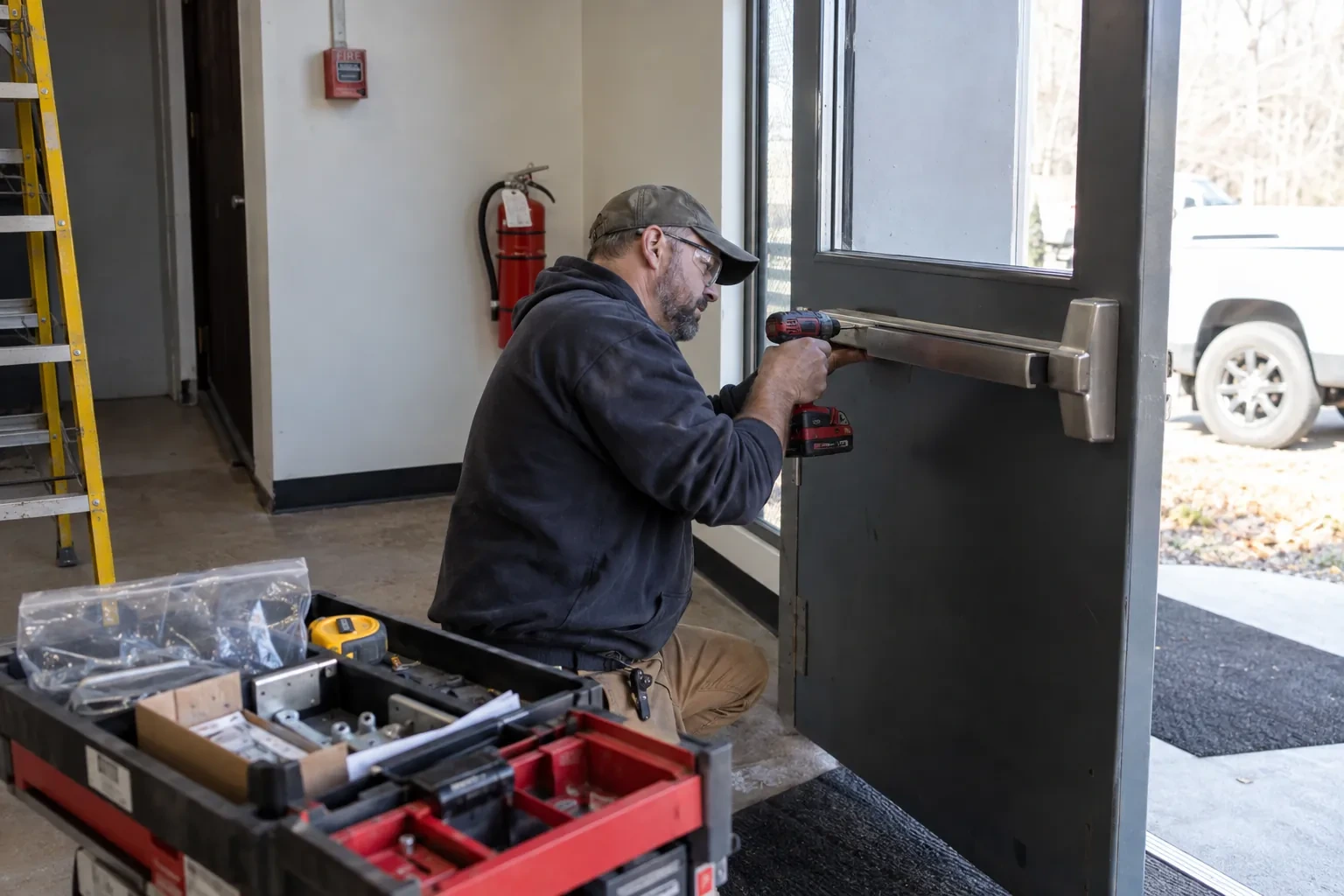
For a main exit door the hardware choice has a safety side as well as a security side. A door people leave a home through should open from the inside without a key, so a single-cylinder deadbolt with an inside thumb-turn is the standard fit rather than a bolt keyed on both faces. Where glass sits close to the lock, the answer is a captive thumb-turn, laminated glass, or a tested security-film system with its specified frame attachment, not a key on the inside. The locksmith explains the trade-offs, fits the lock that keeps a stranger out and the family able to leave, and shows everyone the thumb-turn.
How the visit goesSomeone tried the door last winter. The frame took it, but the strike plate is bent, one screw hole is stripped, and the bolt sits in the pocket at a slight angle. It still locks, and it still bothers you every night.
Deadbolt Installation
How the visit goes
What the door is made of
The first thing the locksmith reads is the door itself, because it decides how the holes get cut. A solid wood slab in a century home bores cleanly but can split at the edge if the mortise is rushed. A steel-clad insulated door has a thin metal skin over foam, sometimes with a wood block at lock height, and needs a metal-cutting hole saw run slowly. Fibreglass behaves like a hard plastic and chips if the bit grabs. Thickness matters too: most exterior doors are 44 mm, some older ones 35 mm, and the deadbolt's screws and collar have to suit that. Ten seconds with a tape and a knuckle on the face answer all of this.
Swapping an old deadbolt in place
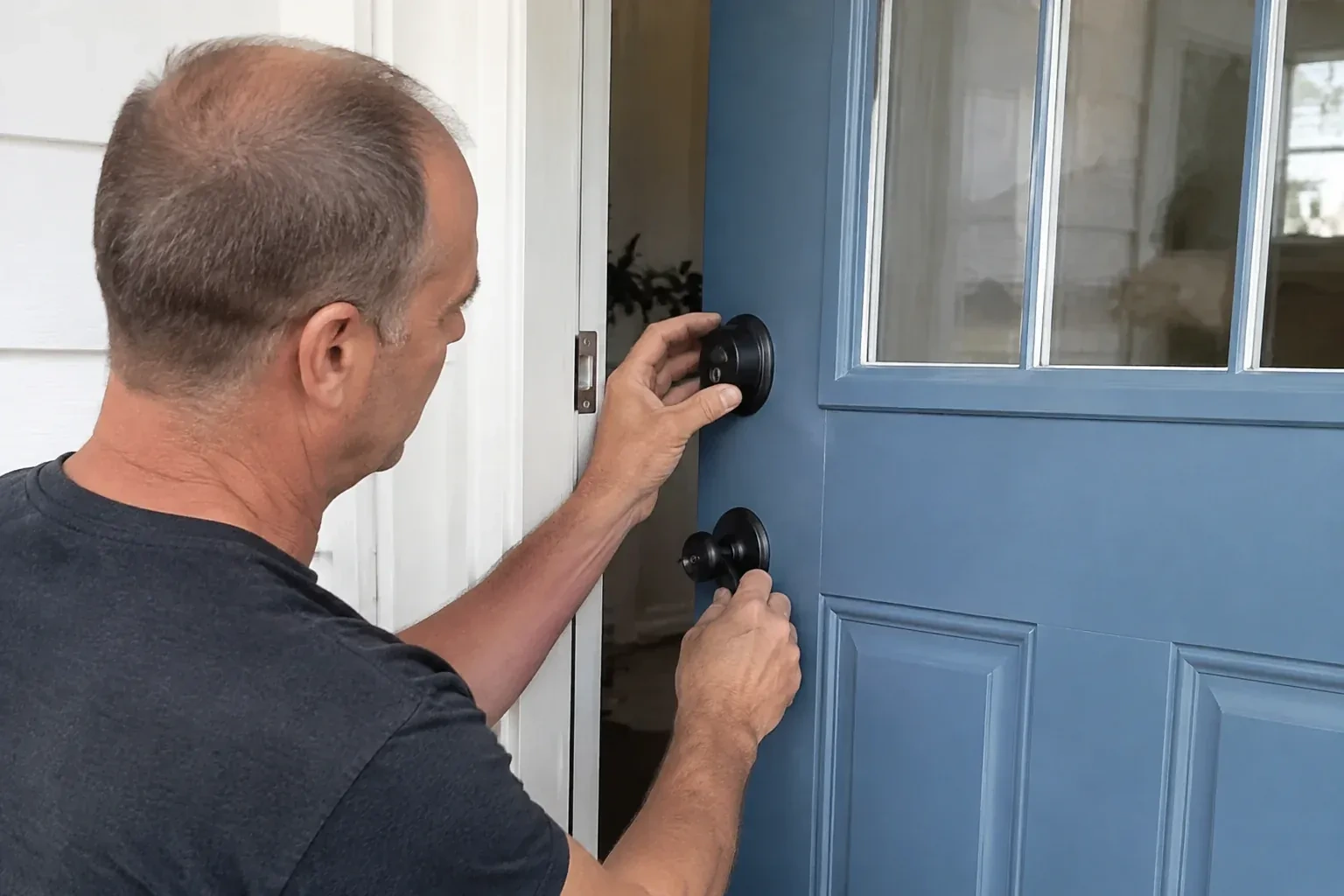
When an existing bolt is being replaced, the work starts by backing out the two inside screws and lifting off both housings, then removing the bolt from the edge. The bore and backset are measured against the new hardware, and any difference is dealt with before the new bolt goes in: a larger bore for a smart deadbolt, a different faceplate shape, or a spacer for a thinner door. The new bolt, cylinder and thumb-turn go on in the usual order. The old strike comes off too, the pocket is deepened if needed, and a reinforced strike with long screws replaces it, so the upgrade happens on both sides of the gap.
Looking after it through the seasons
A deadbolt asks for very little, and most of it happens twice a year. In spring and again in autumn, throw the bolt with the door closed and notice whether it still slides in freely; wood doors swell in humid summers and shrink in dry winter air, and the first sign is a bolt that needs the door pulled before it will lock. If so, a small strike adjustment puts it right. Give the bolt and keyway a puff of whatever lubricant the lock's own maker specifies, often dry PTFE or graphite, since some cylinders are serviced with oil instead. Wipe salt off the outside trim after a slushy week so the finish stays bright.
Deadbolt Installation
In the van
Boring jig and 54 mm hole saw
Reinforced strike plate
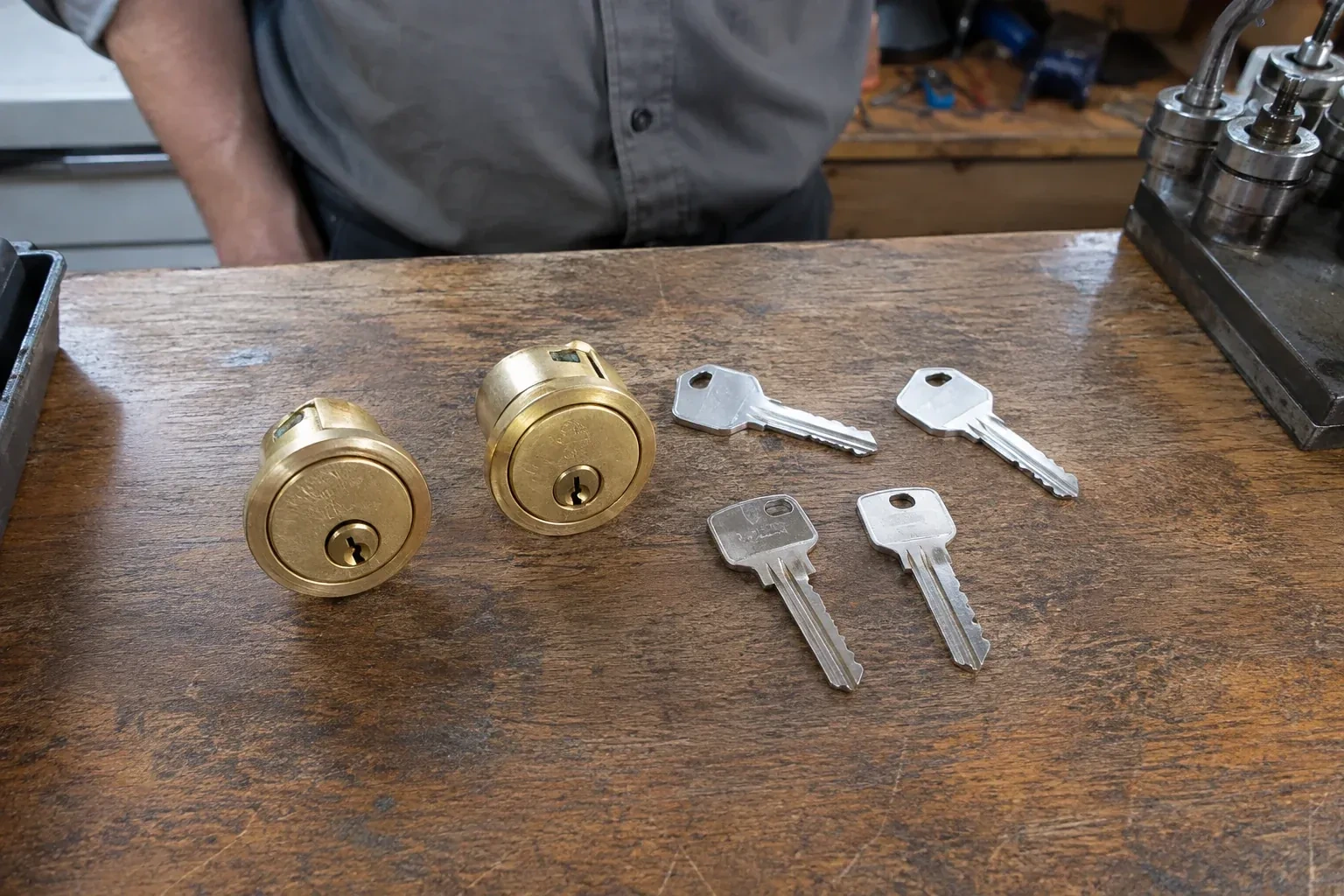
Rekeying pins and key blanks
Dry PTFE lubricant
Jamb reinforcer
Deadbolt Installation
What affects the quote
Number of doors
One front door is the simplest case. Front, back, side and garage-to-house doors done in one visit share the travel and setup, so the per-door figure usually eases as the count rises.
Door material
Solid wood, steel-clad and fibreglass doors are each cut differently. Metal skins call for slower cutting and cleanup of filings, so the material is one of the first things a quote takes into account.
Grade and type of deadbolt
A builder-grade bolt, a residential model with a high security grade, and a heavy commercial-pattern deadbolt sit at different points in the hardware part of the quote, and the locksmith explains the differences.
What to have ready
- Is the door solid wood, steel-clad or fibreglass, and roughly how thick is it?
- Which doors do you want a deadbolt on, and does each one already have a bolt or only a knob?
- Would you like a keyed deadbolt, a keypad, or a smart lock you can control from a phone?
Deadbolt Installation: questions
QuestionsWhat do lock grades mean when I am picking a deadbolt?
Residential deadbolts are graded under an industry standard in three categories, security, durability and finish, with letter grades from C through A, so a lock marked with three A grades has met the highest level in each. Heavier commercial-pattern bolts are graded 1, 2 or 3, with 1 the highest. The grades let you match hardware to a busy family door or an exposed side entrance without relying on the weight of the box.
What is the difference between a deadbolt and the lock in my door knob?
The knob or lever holds the door shut with a spring latch: a bevelled tongue that snaps into the frame and can be pushed back by anything slid into the gap. A deadbolt is a solid rectangular bar driven by the key or thumb-turn alone, and when fully thrown it locks in place so it cannot be pressed back from the edge. The knob keeps the door closed; the deadbolt keeps it locked.
Does the finish of the deadbolt matter beyond looks?
It does on an exposed door. Winter salt spray, summer sun and humid air all work on the outside trim, and residential deadbolts carry a finish grade that reflects how well the coating resists them. A lifetime or PVD-style finish stays bright longer on a south-facing or roadside door, while a sheltered porch door can carry any finish you like. Matching the knob or lever below is mostly a matter of taste.
Related services
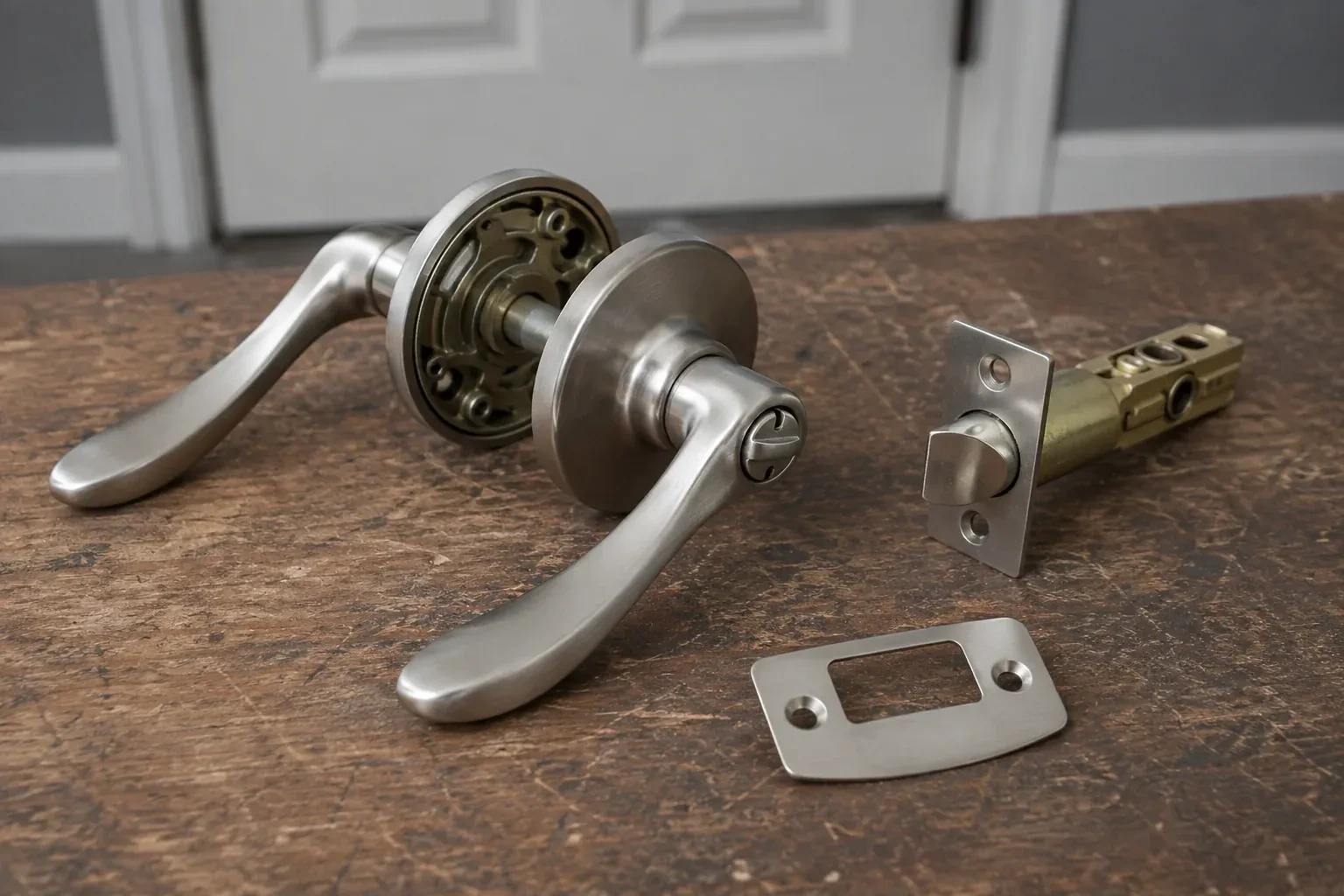
- Lock Replacement & UpgradeEvery morning the front door key needs the same little dance: push in, lift, wiggle, turn.
- Vintage Mortise Lock ServiceThe knob flops loose on its spindle and never springs back to level.
- Smart Lock InstallationThere are four copies of the front-door key floating around: one with the cleaner, one with a neighbour, one on a hook at your parents' place, and one you honestly cannot account for.